
Vijayadashami or Dussehra : 2025
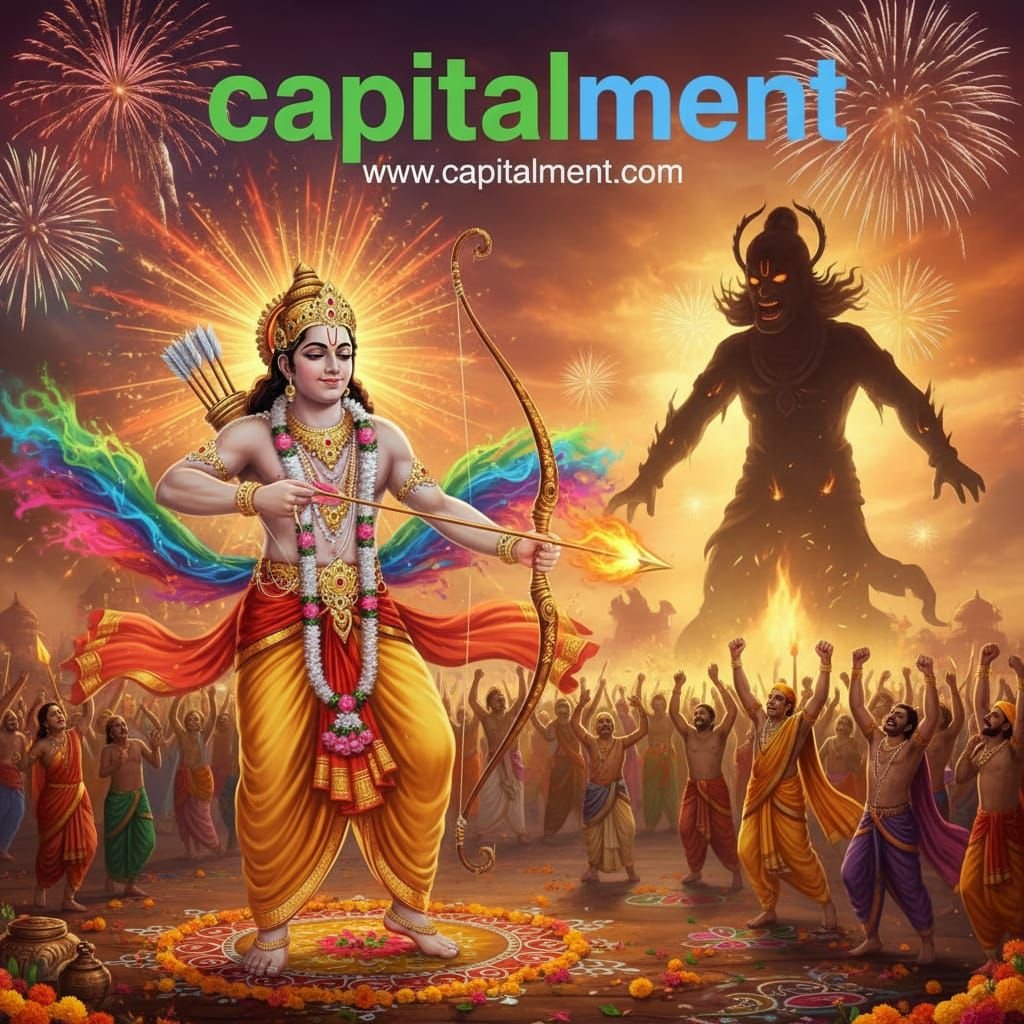
Vijayadashami—also known as Dussehra, Dasara, Dassahra, or Dashain—is one of the most significant Hindu festivals, marking the triumph of good over evil. It is celebrated with great fervor across India, Nepal, and the Indian diaspora, each region infusing its own traditions, stories, and rituals into the festival. The festival typically falls in the Hindu month of Ashvin (September–October in the Gregorian calendar), on the tenth day of the waxing moon, concluding nine nights of Navaratri, a period of intense devotion to the goddess.
What is Vijayadashmi ?
Sanskrit compound: “Vijaya” (victory) and “Dashami” (tenth day), meaning “the victory on the tenth day”. The festival is celebrated as the culmination of the nine-day Navaratri (nine nights) festival dedicated to the goddess Shakti or Devi (Durga).The date of Vijayadashami 2025 is October 2, 2025 (the tenth day of the bright half of Ashvin, as per the Hindu lunar calendar).
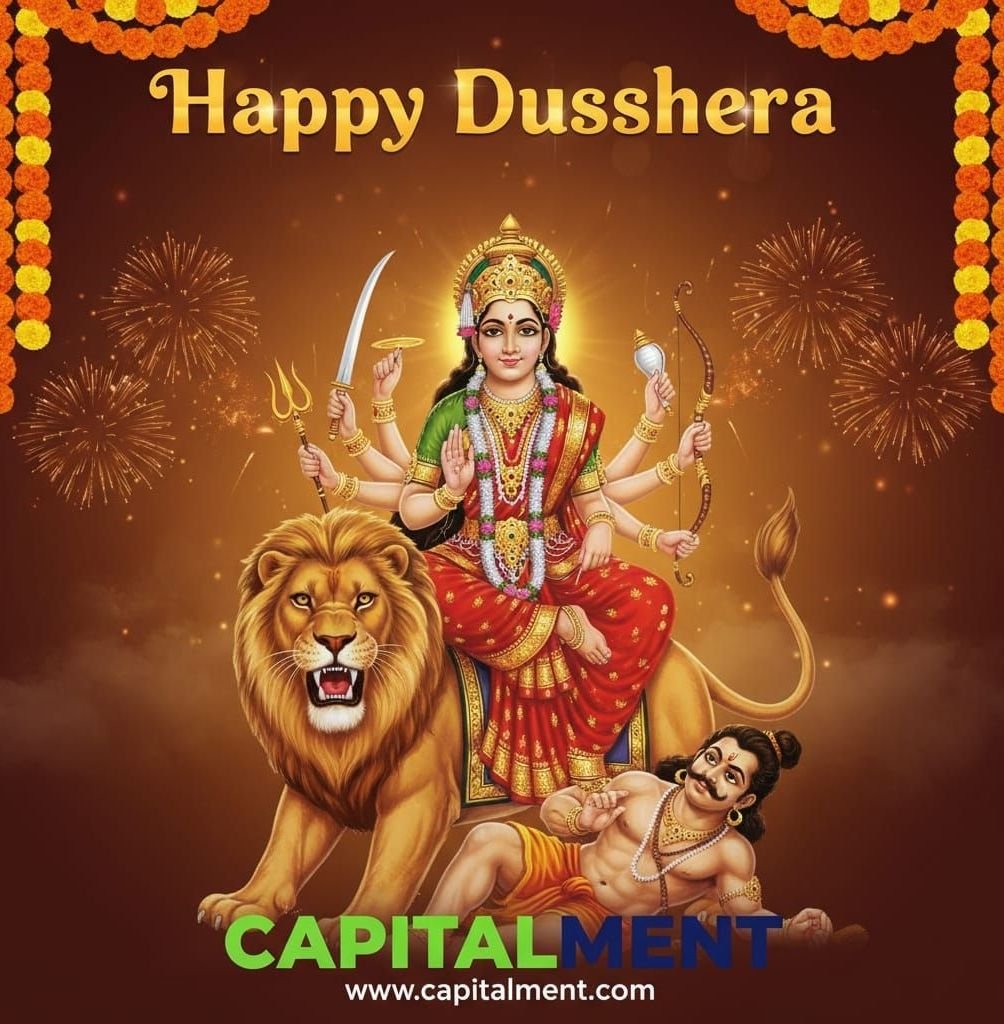
On this day, Hindus celebrate the victory of divine power over demonic forces, symbolising the triumph of righteousness over evil.
Why We Celebrate Vijayadashami
The festival commemorates two great mythological victories:
Lord Rama’s Victory Over Ravana:
In the northern, western, and central regions of India, Vijayadashami marks the climax of the Ramlila—the dramatic enactment of episodes from the epic Ramayana—when Lord Rama, the seventh avatar of Lord Vishnu, defeats the ten-headed demon king Ravana, rescues his wife Sita, and restores dharma (righteousness) on earth.
The burning of Ravana’s effigy symbolizes the destruction of evil within and without.
Goddess Durga’s Victory Over Mahishasura:
In the eastern, southern, and some northern states, the festival marks the end of Durga Puja, celebrating the goddess Durga’s victory over the buffalo demon Mahishasura, who had terrorized heavens and earth. After nine nights of battle, Durga slays Mahishasura on the tenth day—Vijayadashami—restoring peace and order.
Other Traditions:
In the Mahabharata, Vijayadashami also marks the day Arjuna, one of the Pandava brothers, retrieved divine weapons hidden in a shami tree and defeated the Kauravas. This is remembered in some regions by worshipping weapons and tools (Ayudha Puja).
The Stories Behind Vijayadashami
The Ramayana:
Lord Rama vs. Ravana
The Ramayana narrates the story of Rama, prince of Ayodhya, who is exiled to the forest with his wife Sita and brother Lakshmana. Ravana, the ten-headed king of Lanka, kidnaps Sita and takes her to his island fortress. Rama, aided by his loyal devotee Hanuman and an army of monkeys, wages war against Ravana. After fierce battles and diplomatic efforts fail, Rama faces Ravana in a final confrontation.
Ravana, due to a boon from Lord Brahma, was invincible to gods, demons, and spirits—but not to humans. Lord Vishnu incarnated as Rama, the ideal human, to slay Ravana.
The battle raged for days, climaxing on the tenth day (Vijayadashami), when Rama slays Ravana, rescues Sita, and returns to Ayodhya, where the people light lamps in celebration—prefiguring Diwali, which occurs twenty days later.
The Devi Mahatmya:
Durga vs. Mahishasura
According to the Devi Mahatmya, the demon Mahishasura, after intense penance, receives a boon from Brahma that he cannot be killed by any man or god. Empowered, he terrorizes the universe. The gods, unable to defeat him, pool their energies to create the goddess Durga. She rides a lion, wields divine weapons, and battles Mahishasura for nine nights, finally slaying him on the tenth, restoring cosmic order.
The Mahabharata:
Arjuna and the Shami Tree
In another episode, the Pandavas, during their exile, conceal their weapons in a shami tree. On Vijayadashami, Arjuna retrieves them, signifying the end of exile and the readiness to fight injustice. The shami tree symbolizes victory, endurance, and strength.
Which Gods Are Worshipped?
Vijayadashami is dedicated primarily to Durga (the goddess Shakti) in the eastern and southern states, and to Rama and Sita in northern and western India.
The festival also honours Lakshmi (goddess of wealth), Saraswati (goddess of knowledge), Ganesha (remover of obstacles), and Kartikeya (god of war), especially in Bengal and South India, where their idols are worshipped and then immersed in rivers.
Ayudha Puja (worship of weapons and tools) is observed in many places, where people clean, decorate, and venerate their instruments of work—cars, machines, books, pens, vehicles, and even kitchen utensils—seeking blessings for success and safety in their professions.
Symbols and Rituals
Effigies and Fireworks
In North India, towering effigies of Ravana, Kumbhakarna, and Meghnad are constructed and burned with fireworks, symbolizing the end of evil.
Ramlila performances—folk dramas—reenact episodes from the Ramayana, culminating in the burning of Ravana’s effigy.
Sindoor Khela and Shubho Bijoya
In Bengal, after the immersion of Durga’s idol, women participate in “sindoor khela”—applying red vermilion on each other and sharing sweets—while families greet each other with “Shubho Bijoya” (auspicious victory), seeking blessings from elders.
Mysore Dussehra
In Karnataka, the Mysore royal family leads a grand procession featuring decorated elephants, the state sword, and the idol of Chamundeshwari (a form of Durga), commemorating the goddess’s victory over Mahishasura on Chamundi Hill.
Ayudha Puja
Across South India, people clean, decorate, and worship their tools, vehicles, and instruments, seeking divine blessings for efficiency and safety in their professions.
Shami Tree
Leaves of the shami tree are exchanged as a symbol of good luck, especially among Marwaris and some South Indian communities, referencing the Mahabharata episode.
Fasting, Prayers, and Feasting
Devotees observe fasting during Navaratri, perform daily pujas, sing devotional songs, and on Vijayadashami, break their fast with festive meals, sharing sweets and gifts with family and friends.
The Significance and Importance of Vijayadashami
Vijayadashami is not merely a historical or mythological commemoration. It is a living tradition with deep spiritual and cultural resonance.
Spiritual Renewal
The festival symbolizes the victory of righteousness (dharma) over unrighteousness (adharma), urging people to conquer their inner demons—anger, greed, pride, lust, and illusion—represented by Ravana’s ten heads. The burning effigy of Ravana is a reminder to eradicate negativity and embrace positivity.
Cultural Unity
Vijayadashami is celebrated differently across India, yet the core message—victory of good over evil—unites the nation. Whether as Durga Puja, Dussehra, or Dasara, the festival transcends regional, linguistic, and sectarian boundaries, fostering national integration.
New Beginnings
The day is considered highly auspicious for starting new ventures, education, and artistic pursuits. In South India, it is traditional for children to begin formal education on Vijayadashami, blessing them with wisdom and success.
Prosperity and Well-being
The worship of Lakshmi and the veneration of tools (Ayudha Puja) are prayers for prosperity and productivity, seeking divine grace for success in all endeavours.
Family and Community Bonding
The festival brings families and communities together—through pujas, processions, dramas, feasts, and cultural programs—strengthening social ties and collective identity.
Philosophical and Psychological Dimensions
Beyond ritual, Vijayadashami has profound psychological and philosophical meaning. The ten days of Navaratri are seen as a spiritual journey—progressively conquering ego, ignorance, and delusion (symbolized by Mahishasura and Ravana) to attain self-realization (symbolized by Rama’s return and Durga’s victory). The festival reminds us that no matter how formidable evil appears, truth and virtue ultimately prevail.
Vijayadashami and Modern Life
In contemporary times, Vijayadashami’s message remains relevant. The festival encourages introspection, self-improvement, and the pursuit of righteousness in personal and professional life. The emphasis on knowledge (Saraswati), wealth (Lakshmi), and strength (Durga) reflects a holistic approach to prosperity and well-being.
Conclusion
Vijayadashami is a multifaceted festival—a commemoration of cosmic victories, a spiritual milestone, a cultural extravaganza, and a social unifier. It is celebrated with grand processions, dramatic performances, devotional fervor, and community feasts across India. The burning of Ravana, the immersion of Durga, the worship of tools, and the exchange of shami leaves—all these rituals reinforce the timeless message: Good will always triumph over evil, and light will always dispel darkness.Through its myths, rituals, and symbols, Vijayadashami inspires individuals and communities to strive for righteousness, unity, knowledge, and prosperity—making it one of the most cherished festivals in the Hindu calendar.