
Chhath Puja 2025: A Sacred Festival of Sun Worship, Gratitude, and Scientific Wisdom
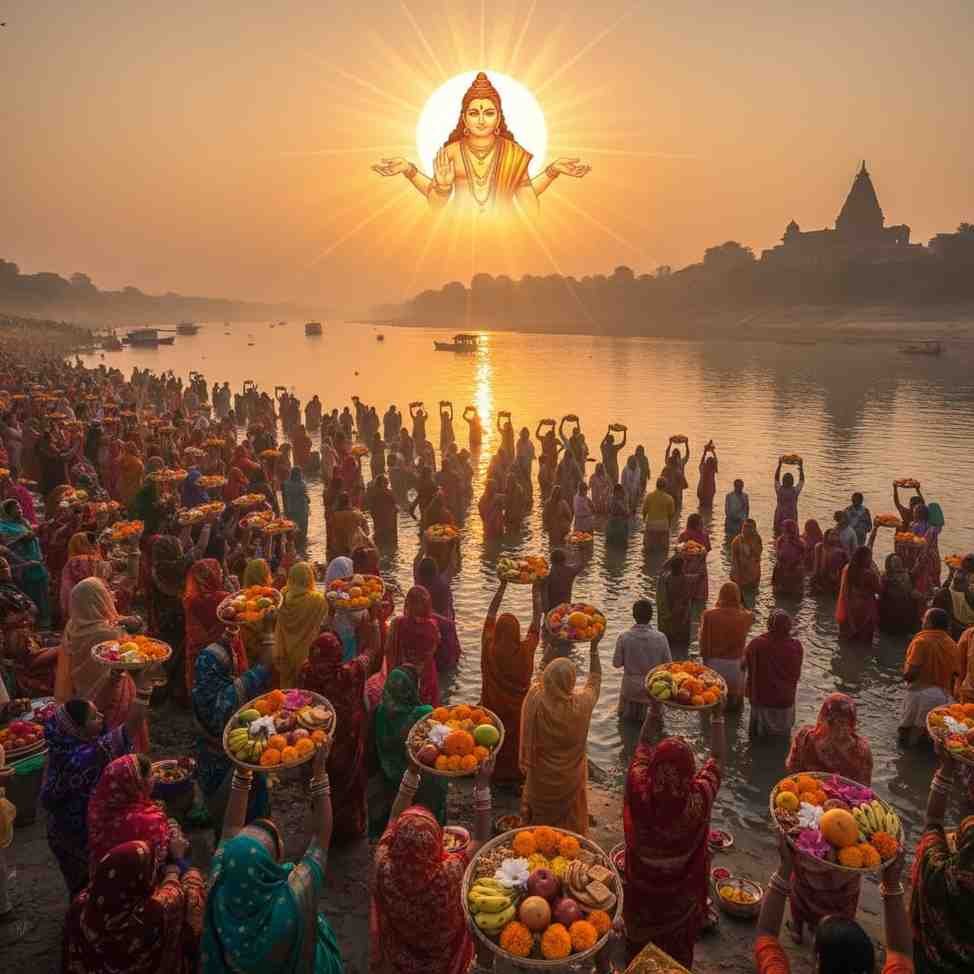
The gentle glow of dawn breaks over the riverbanks as devotees stand waist-deep in holy waters, their hands raised in reverence toward the rising sun. This is Chhath Puja—one of the most ancient and spiritually profound festivals celebrated primarily in Bihar, Jharkhand, Uttar Pradesh, and parts of Nepal. In 2025, this beautiful festival will be observed from October 25th to October 28th, marking four days of rigorous fasting, devotion, and communion with nature.
The Timeless Story Behind Chhath Puja
The origins of Chhath Puja are woven into the fabric of Hindu mythology, with several fascinating legends explaining its inception.
The Tale of Karna:
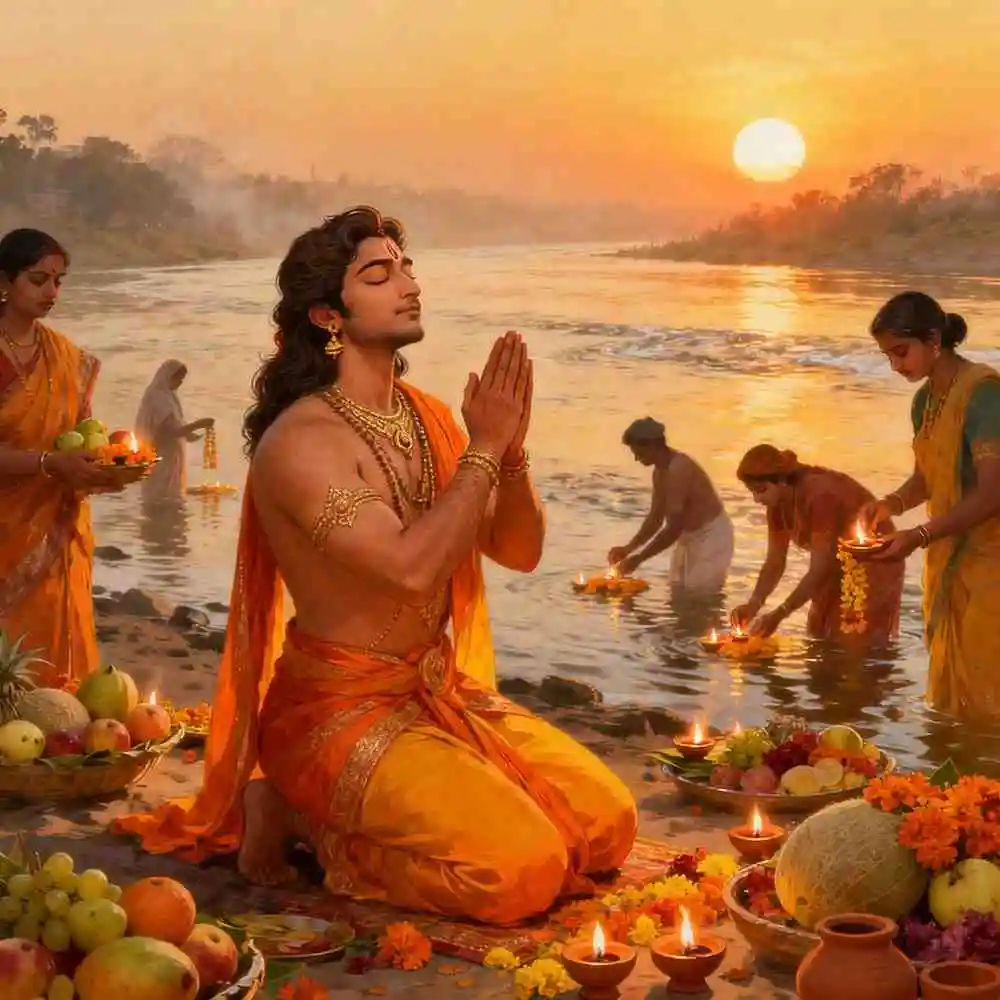
The most popular legend traces back to Karna, the valiant warrior from the Mahabharata and son of Surya (the Sun God). Born with divine armor and earrings, Karna was a devoted worshipper of his father. It is believed that he would stand in water and offer prayers to the setting and rising sun, establishing the ritual that continues today. His unwavering devotion and the spiritual discipline he maintained became the foundation of Chhath Puja.
Lord Rama’s Gratitude:
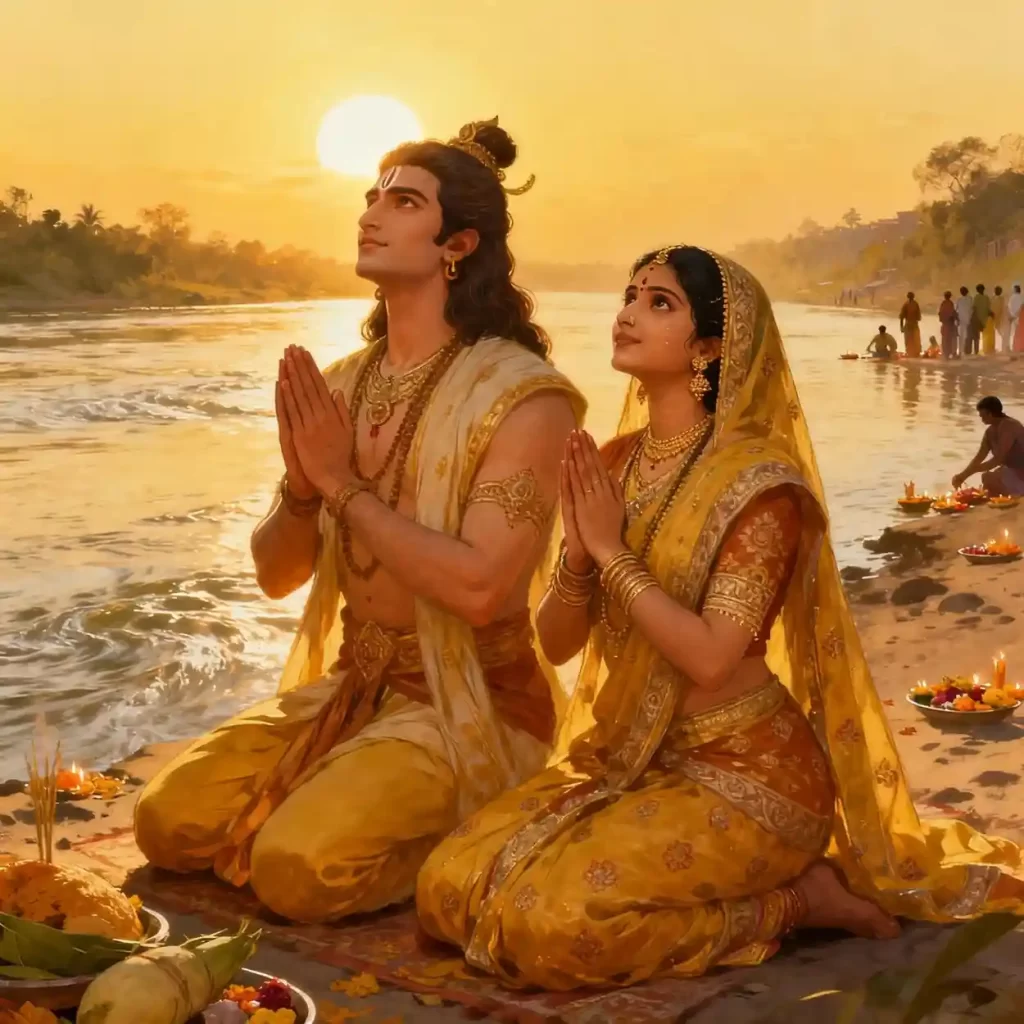
Another beautiful narrative connects Chhath Puja to Lord Rama and Sita. After their victorious return to Ayodhya following the defeat of Ravana, they observed a fast and offered prayers to the Sun God during the month of Kartik. Sita performed rigorous rituals to express gratitude for their safe return and the prosperity of their kingdom, thus establishing the tradition of Chhath worship.
The Legend of Draupadi:
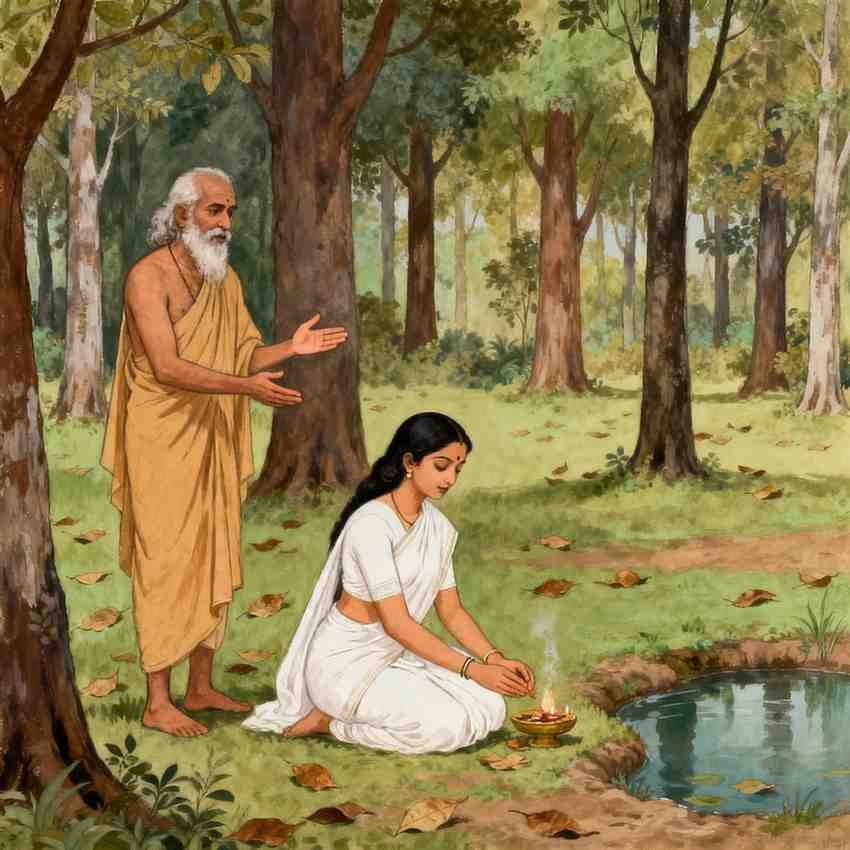
Some versions also mention that Draupadi and the Pandavas performed Chhath Puja to overcome their difficulties and regain their lost kingdom, guided by the sage Dhaumya who taught them the proper rituals.
The Divine Deities of Chhath
Chhath Puja is unique in its worship of natural elements as divine forces:
Surya Dev (Sun God): The primary deity, representing the source of all life, energy, and healing. The sun is worshipped for sustaining life on earth and for bestowing health, prosperity, and progress.
Chhathi Maiya (Shashthi Devi): The sister of Surya and the goddess of motherhood, fertility, and children’s wellbeing. She is believed to protect children and bless devotees with offspring. The festival is named after her.
Usha and Pratyusha: Representing the dawn and dusk, these divine energies are honored during the evening and morning arghya (offerings).
The Complete Ritual Guide: Four Days of Sacred Observance
Day 1: Nahay Khay (October 25, 2025)
The festival begins with purification. Devotees, called vrati, take a holy dip in rivers or ponds, preferably in the Ganges. They clean their homes thoroughly and prepare a simple, pure meal—usually rice, dal, and pumpkin curry. This meal is consumed only once, marking the beginning of the spiritual journey.
Day 2: Kharna (October 26, 2025)
This is the day of rigorous fasting. The vrati observes a complete fast without even water (nirjala vrat) from sunrise until evening. After worshipping the sun at sunset, they break their fast with prasad consisting of:
- Kheer (sweet rice pudding made with jaggery)
- Chapati
- Bananas
After this meal, the 36-hour fast begins without food or water—one of the most challenging aspects of Chhath Puja.
Day 3: Sandhya Arghya (October 27, 2025)
The most visually stunning day of the festival. Devotees prepare soop (bamboo baskets) filled with offerings:
- Thekua (traditional sweet made from wheat flour and jaggery)
- Seasonal fruits
- Coconut
- Sugarcane
- Rice laddoos
In the evening, entire families gather at riverbanks, ponds, or specially created artificial ponds. Standing in water, the vrati offers arghya to the setting sun, a breathtaking moment of collective devotion as hundreds of devotees face west, their offerings held high.
Day 4: Usha Arghya (October 28, 2025)
The festival concludes before dawn. Devotees return to the water bodies to offer arghya to the rising sun. After this morning offering, they break their 36-hour fast with prasad and water, marking the completion of their spiritual journey.
The Deep Significance of Chhath Puja
Gratitude Over Petition: Unlike many festivals where devotees ask for blessings, Chhath Puja emphasizes thankfulness. It’s about expressing gratitude to the sun for sustaining life on earth.
Equality and Simplicity: This festival transcends social barriers. Rich and poor stand together in the same water, offering the same prayers. There are no priests or elaborate temple rituals—it’s a direct connection between the devotee and the divine.
Environmental Consciousness: Chhath Puja naturally promotes environmental awareness. Devotees clean rivers and water bodies before the festival. The offerings are completely biodegradable—fruits, sweets made from natural ingredients, and earthen lamps.
Family Bonding: The entire family participates in the preparations, creating strong bonds across generations. Recipes and rituals are passed down, preserving cultural heritage.
The Remarkable Scientific Dimensions
What fascinates me most about Chhath Puja is how ancient wisdom aligns perfectly with modern science:
Solar Energy Absorption: Standing in water during sunrise and sunset allows the body to receive solar energy when UV radiation is minimal but beneficial. Water acts as a conductor, and the ritualistic posture enables optimal absorption of vitamin D and solar energy that regulates biological processes.
Detoxification Through Fasting: The 36-hour fast triggers autophagy—a cellular cleaning process where the body removes damaged cells and regenerates new ones. Modern research shows periodic fasting boosts immunity, improves metabolic health, and enhances mental clarity.
Hydrotherapy Benefits: Standing in flowing water provides natural hydrotherapy, improving blood circulation, reducing stress, and rejuvenating the body. The specific timings leverage the geomagnetic energy of earth during sunrise and sunset.
Circadian Rhythm Reset: Worshipping at specific solar timings—sunset and sunrise—helps reset the body’s circadian rhythm, improving sleep patterns and hormonal balance.
Probiotic Foods: The prasad items like thekua, made with jaggery and wheat, along with the simple kheer, are easy to digest after fasting and contain natural probiotics that restore gut health.
Mental Health Benefits: The discipline, focus, and spiritual connection during Chhath Puja reduce stress hormones like cortisol while increasing endorphins and serotonin, promoting mental wellbeing.
Capitalment Personal Perspective on Chhath Puja
Having witnessed Chhath Puja celebrations, Capitalment deeply moved by the authenticity and rawness of this festival. In our modern age of instant gratification, Chhath stands as a powerful reminder of discipline, patience, and genuine devotion.
What strikes Capitalment most is the democratic spirit of Chhath—there’s no intermediary between the devotee and the divine. No one can perform the ritual on your behalf; it’s your personal journey. This direct relationship with nature and cosmic energies feels revolutionary even today.
The festival also represents an environmental ethic we desperately need. When devotees clean the ghats before Chhath, they’re not just performing a ritual—they’re acknowledging their responsibility toward nature. The insistence on biodegradable offerings shows how spirituality and environmental consciousness can coexist beautifully.
The resilience of Chhath devotees, especially women who undertake this challenging fast, inspires profound respect. Standing in cold water during the Kartik month (October-November), maintaining a 36-hour fast without water, all while managing household responsibilities—this demonstrates extraordinary physical and mental strength.
Moreover, Chhath Puja teaches us to honor our life source—the sun—without which nothing would exist. In our technology-driven lives, we’ve become disconnected from natural rhythms. Chhath reconnects us to the fundamental reality that we are children of the cosmos, dependent on celestial bodies and natural cycles.
Chhath Puja in Contemporary Times
Today, Chhath Puja has transcended regional boundaries. Cities like Delhi, Mumbai, and Kolkata create artificial ponds to accommodate devotees. The diaspora celebrates Chhath worldwide—from London to New York—maintaining their cultural roots while adapting to new environments.
However, urbanization brings challenges. Polluted rivers, lack of clean water bodies, and space constraints in cities make observing Chhath difficult. Yet the devotion remains unshaken, with communities coming together to create suitable spaces.
The Capitalment Message
Chhath Puja ultimately conveys a timeless message: recognize the source of your existence and express gratitude. It reminds us that humans are part of a larger cosmic design, not separate from nature but integral to it.
The festival teaches us that true spirituality doesn’t require expensive offerings or elaborate ceremonies—it requires sincerity, discipline, and a grateful heart. It shows us that some of the most profound spiritual experiences come from simplicity, not complexity.
As the sun rises on the fourth day of Chhath Puja 2025 and devotees break their fast with prasad, they complete more than a religious ritual—they complete a journey of self-purification, gratitude, and reconnection with the natural forces that sustain us all. In a world racing toward the future, Chhath Puja invites us to pause, look at the sun, and remember our place in the eternal cycle of existence.
Chhathi Maiya ki Jai! Surya Bhagwan ki Jai!