
BT ACT 1885
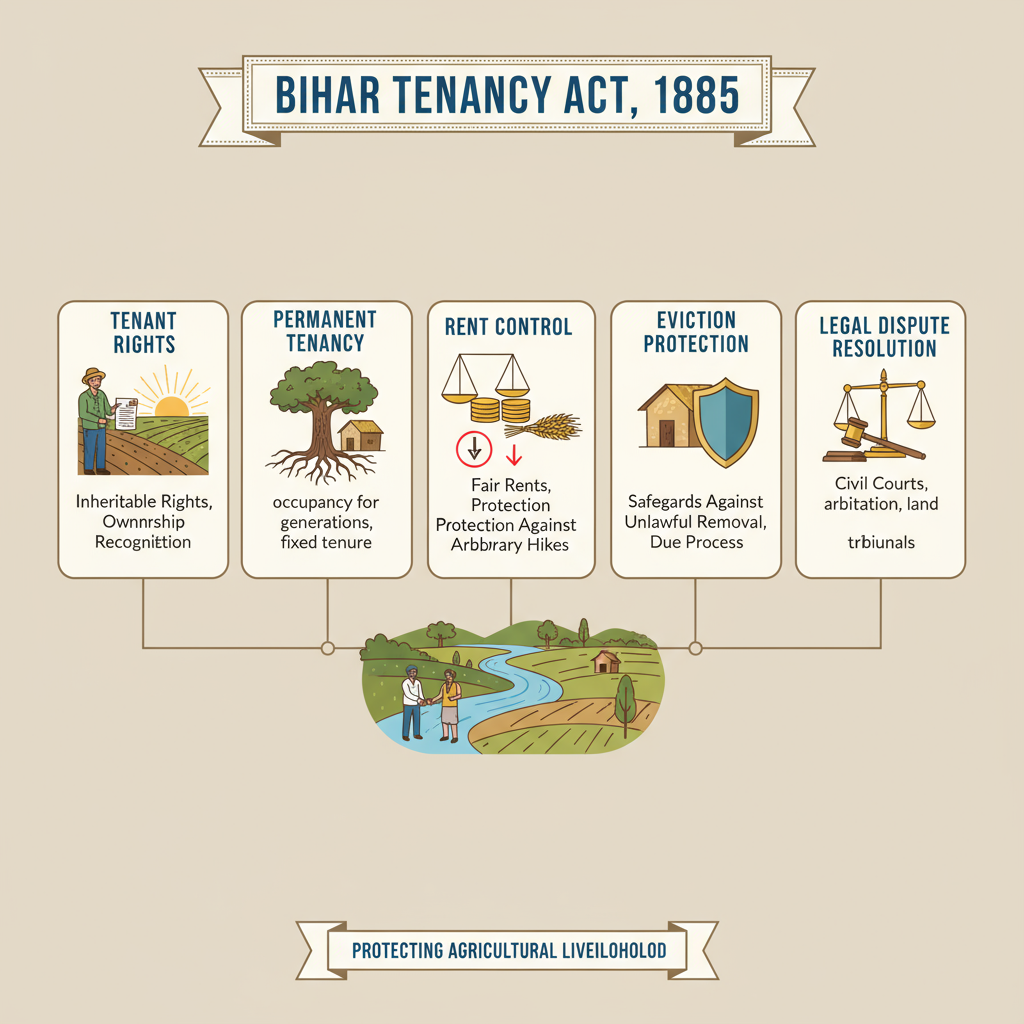
Here is a detailed explanation of the Bihar Tenancy Act, 1885, This will cover its history, importance, main provisions, and key points explained simply.
Bihar Tenancy Act, 1885: A Detailed Explanation
Introduction
The Bihar Tenancy Act of 1885 is a landmark law enacted during British rule to regulate the relationship between landlords and tenants in Bihar. It forms the foundation for tenancy rights and agricultural land tenure in the region. Though the law is over a century old, many of its principles continue to be relevant in Bihar’s land governance.
History of Bihar Tenancy Act, 1885
During the late 18th and 19th centuries, landownership in Bihar was dominated by landlords or zamindars, while farmers—called tenants or raiyats—worked on their land. Under the Permanent Settlement of 1793, zamindars were given tax collection rights and control over tenants but tenants had very little protection. This often led to exploitation, with tenants facing eviction and large rental demands.
Widespread agrarian unrest and uprisings by tenants in Bengal and Bihar called for reform. The colonial government, responding to these pressures, passed the Bengal Tenancy Act in 1885, which also applied to Bihar. This law aimed to protect tenants by recognizing their rights and limiting the landlords’ arbitrary powers.
The Bihar Tenancy Act, 1885, was therefore a response to resolve the conflict between landlords and tenants and to provide security to farmers, helping stabilize rural society economically and socially.
Importance of the Bihar Tenancy Act, 1885
The Bihar Tenancy Act was important for multiple reasons:
– **Recognition of Tenants’ Rights:** It was among the earliest laws to legally acknowledge the rights of tenants, marking an essential shift toward tenant protection.
– **Permanent Tenancy Concept:** The act recognized tenants who had been tilling the same land for at least 12 years as “permanent tenants,” giving them legally protected rights to stay on the land.
– **Rent Control:** The Act restricted landlords from sharply raising rents, requiring them to follow a legal process for any increase.
– **Protection from Eviction:** Permanent tenants could not be evicted without just cause, reducing fear and insecurity among tenant farmers.
– **Legal Framework:** The law defined tenancy relationships clearly and laid down procedures for disputes, rent payments, transfers, and succession of tenancy rights.
– **Foundation for Later Reforms:** The act influenced future tenancy and land reform laws in Bihar, guiding state policy on land governance.
Key Provisions and Important Points Explained
To make it easier for teaching, the important provisions of the Bihar Tenancy Act can be divided into topics and explained simply.
1. Definitions and Types of Tenants
– **Tenant (Raiyat):** A person who cultivates land owned by another and pays rent.
– **Permanent Tenant:** A tenant who has cultivated the same land continuously for 12 years or more, securing permanence under the act.
– **Occupancy Tenant:** A tenant with rights of occupancy but not permanent tenancy.
– **Non-Permanent Tenant:** Those who do not meet the criteria for permanent tenancy and have fewer protections.
2. Rights of Tenants
– **Security of Tenure:** Permanent tenants cannot be evicted at the landlord’s whim; eviction can only happen for specific lawful reasons (non-payment of rent, breach of terms).
– **Fixed Rent:** The Act limits how much rent can be charged and the conditions under which rent can be increased. The landlord cannot arbitrarily raise rent.
– **Succession Rights:** Tenancy rights can be transferred to heirs or family members upon the tenant’s death.
– **Transfer of Tenancy:** Tenants can transfer their tenancy rights to others, following legal procedures.
3. Obligations of Landlords
– Landlords must respect tenants’ rights and avoid illegal eviction.
– They must follow legal procedures for rent enhancement or eviction, including notice requirements.
– Landlords are responsible for registering tenancy transactions and paying any required fees.
4. Rent Regulation and Increase
– Rent can only be revised after a minimum period, usually not more than once in five years.
– The maximum rent increase allowed is limited by the Act.
– Rent disputes can be taken to the courts or tribunals established to hear land-related matters.
5. Eviction Rules
– Tenants can be evicted if they fail to pay rent or break tenancy terms.
– Eviction must be through court orders or legal tribunals, not self-help by landlords.
– Illegal eviction or forcible dispossession is punishable under law.
6. Dispute Resolution
– The Act provides for agricultural tenancy disputes to be resolved in specific courts or tribunals rather than civil courts, speeding up justice.
– Both landlords and tenants have the right to appeal decisions and seek legal remedies.
7. Registration and Formalities
– Tenancy contracts and transfers must be registered.
– This helps create an official record, protecting both parties
Important Points
What is this Act About?
This law is about protecting the farmers who work on land they do not own by giving them rights so they are not mistreated by landlords.
Who is Protected?
If a farmer has been working the same piece of land for over 12 years, this law gives them a permanent right to live on that land and farm it. They cannot be easily kicked out.
What About Rent?
The farmer pays rent to the landlord, but this rent cannot be suddenly increased. The landlord must follow rules and give time before asking for more money.
Can Landlords Throw Tenants Out?
No, a tenant cannot be forced off the land unless they do not pay rent or break the rules. If the landlord tries to evict illegally, they can be punished by law.
Can the Right to Farm Land be Passed on?
Yes, when the farmer dies or leaves, their family can continue farming the land. The tenant can also sell or give their farming rights to someone else, following the proper process.
What if There is a Dispute?
If the farmer and landlord have arguments about rent or land, they can go to special courts set up only for land disputes to get fair decisions.
Conclusion
The Bihar Tenancy Act of 1885 was a pioneering legal framework aimed at protecting the fundamental rights of tenant farmers. By introducing the permanent tenancy concept, regulating rent, and protecting against arbitrary eviction, it stabilized agrarian relationships in Bihar. While some provisions needed modernization, the act laid the groundwork for subsequent land reform initiatives in the state.
For teaching, focus on the core principles — tenant protection, rent control, and legal recourse — in simple terms to convey how the law helped provide security and justice to farmers working the land.
1 Comment
Add a Comment