
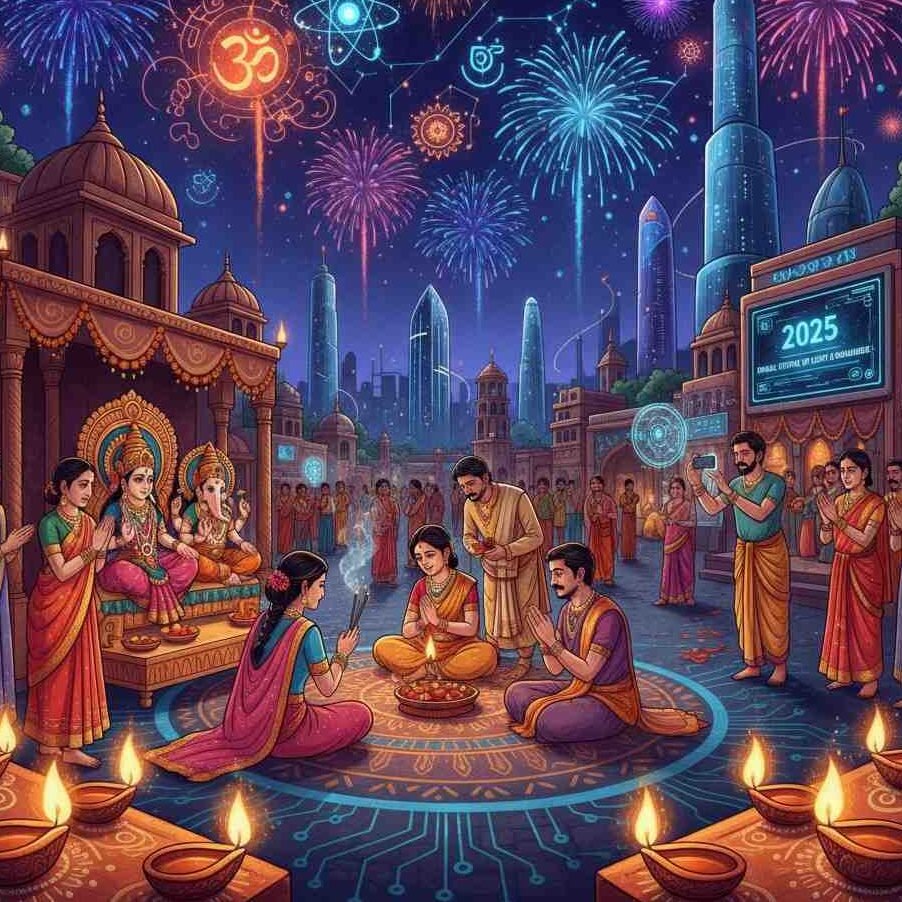
What is Diwali? Understanding India’s Most Beautiful Festival
Imagine an entire nation lighting millions of tiny lamps on the same night, turning darkness into a sea of twinkling lights. That’s Diwali for you—the Festival of Lights that transforms India into a magical wonderland every year!
Diwali, also called Deepavali, comes from two Sanskrit words: “Deepa” meaning lamp, and “Avali” meaning a row or series. Simply put, it means “a row of lights.” This beautiful festival celebrates the eternal truth that light always conquers darkness, good always defeats evil, and knowledge always wins over ignorance.
Diwali 2025 will be celebrated with the main day falling on October 20, 2025 (Monday)
| CAPITALMENT NOTE :- |
| However, this time there is some confusion among people regarding the exact date of the Diwali. According to the Hindu calendar, the Amavasya date spans two days, leading to confusion as to whether Diwali will be celebrated on October 20 or 21. According to the Drik Panchang, this year, the Amavasya Tithi will begin at 3:44 pm on October 20 and end at 5:54 pm on October 21. Therefore, Diwali will be celebrated on October 20. |
The Fascinating Stories Behind Diwali
The Tale of Lord Rama’s Homecoming
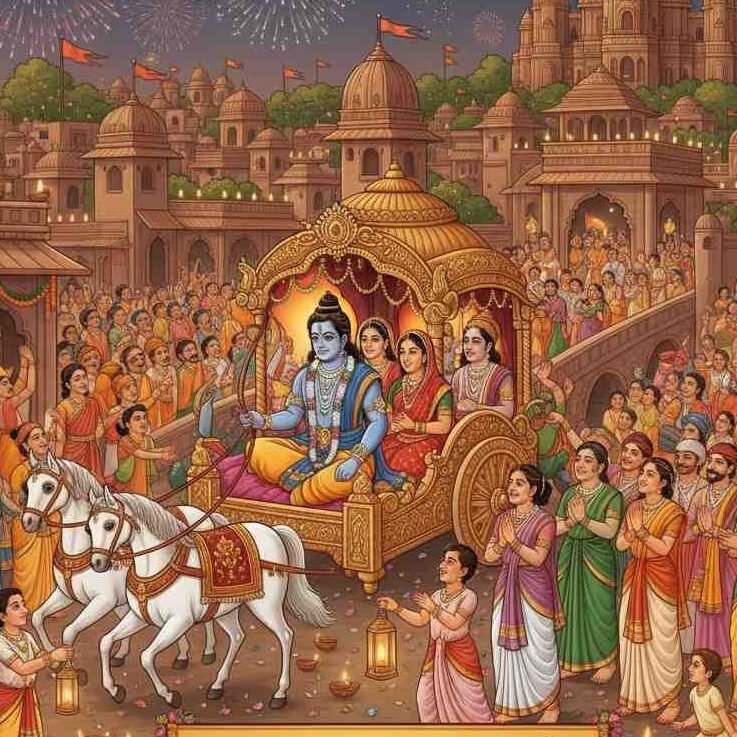
The most popular story behind Diwali comes from the ancient epic Ramayana. After spending fourteen long years in exile and defeating the demon king Ravana who had kidnapped his wife Sita, Lord Rama finally returned to his kingdom of Ayodhya.
The people of Ayodhya were overjoyed! They had waited so long for their beloved king to return. To welcome Lord Rama, Sita, and his brother Lakshmana, the citizens lit thousands of earthen lamps (diyas) throughout the city. The entire kingdom sparkled with lights, celebrating the victory of good over evil.
This tradition continues today—millions of people light diyas in their homes, just like those ancient citizens of Ayodhya did thousands of years ago.
Lord Krishna and the Demon Narakasura
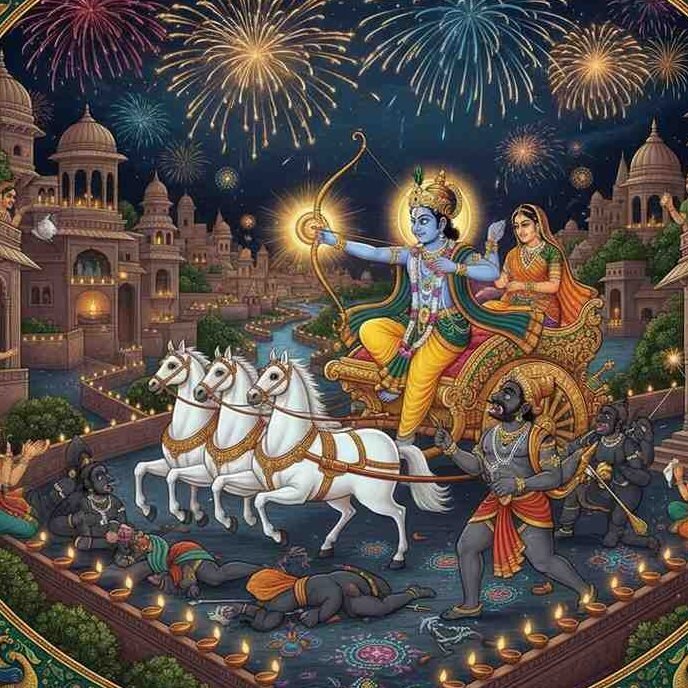
In South India, Diwali celebrates a different story. Lord Krishna defeated a terrible demon named Narakasura who had imprisoned thousands of innocent people and caused great suffering.
On the day before Diwali, known as Naraka Chaturdashi or Choti Diwali, Krishna freed 16,000 prisoners and killed the demon. This victory is celebrated as the triumph of justice and the protection of the innocent.
The Jain Connection: Lord Mahavira’s Nirvana
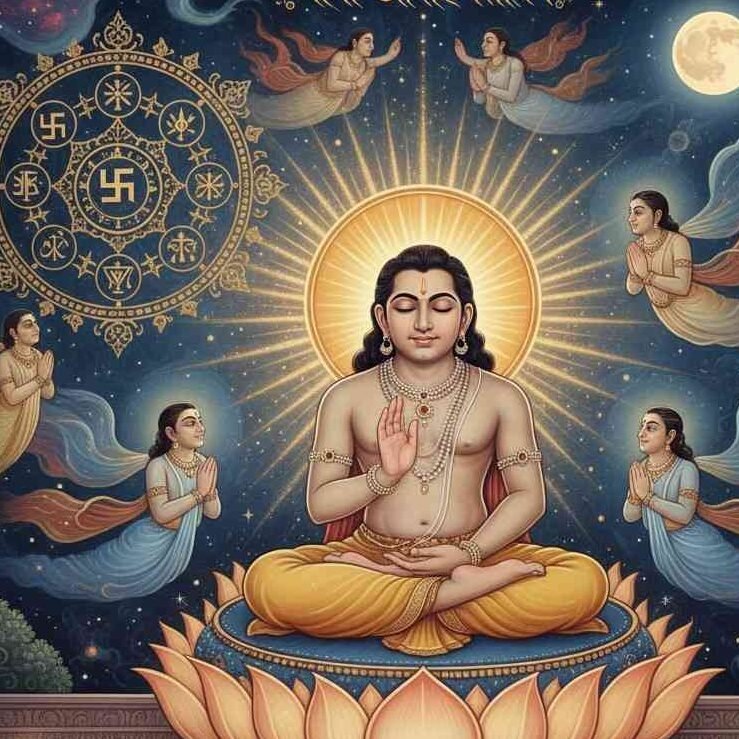
For followers of Jainism, Diwali holds special significance as the day Lord Mahavira, the 24th and last Tirthankara, attained nirvana (eternal liberation) in 527 BCE. Jains celebrate this day by lighting lamps to symbolize the light of knowledge that Mahavira brought to the world.
The Sikh Celebration: Bandi Chhor Divas
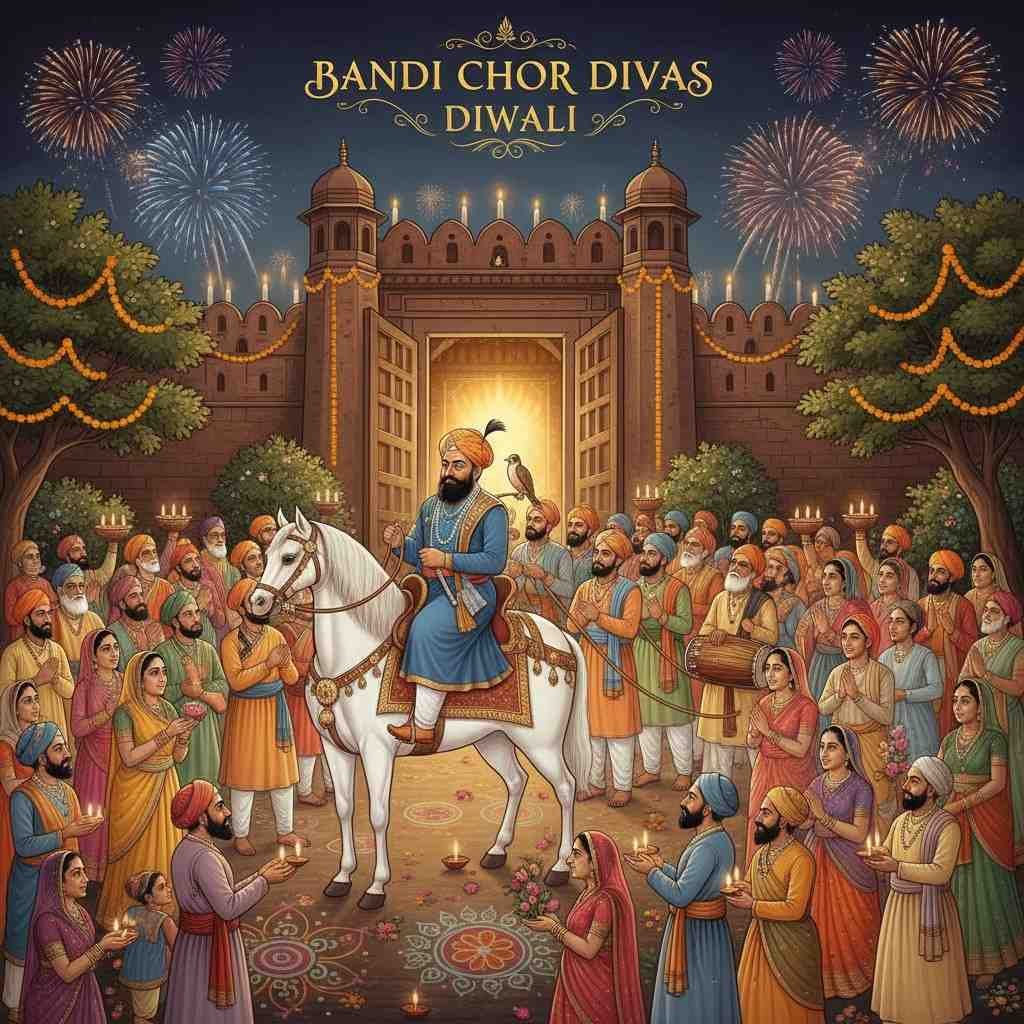
Sikhs celebrate Diwali as Bandi Chhor Divas, commemorating the release of the sixth Guru, Guru Hargobind, from wrongful imprisonment in the Gwalior Fort. When he was released, he ensured that 52 other kings imprisoned with him were also freed. The Golden Temple in Amritsar is beautifully illuminated on this day.
Goddess Lakshmi’s Special Day
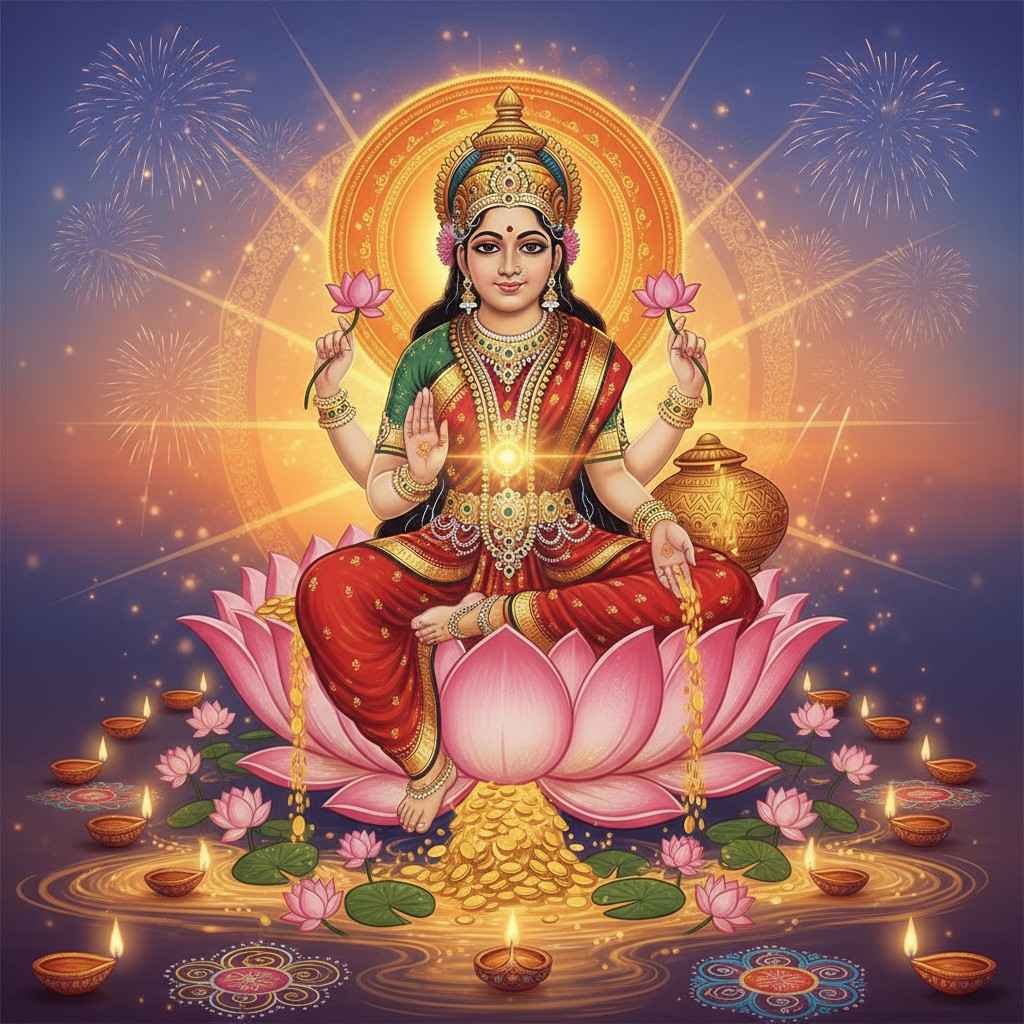
Diwali is primarily dedicated to Goddess Lakshmi, the deity of wealth, prosperity, and fortune. According to Hindu beliefs, on the night of Diwali (Amavasya or new moon night), Goddess Lakshmi visits homes that are clean, well-lit, and welcoming. This is why people thoroughly clean their homes and light lamps—to invite her blessings.
The Five Days of Diwali: A Complete Celebration Guide
Diwali isn’t just one day—it’s a five-day festival, each day with its own special meaning and rituals.
Day 1: Dhanteras
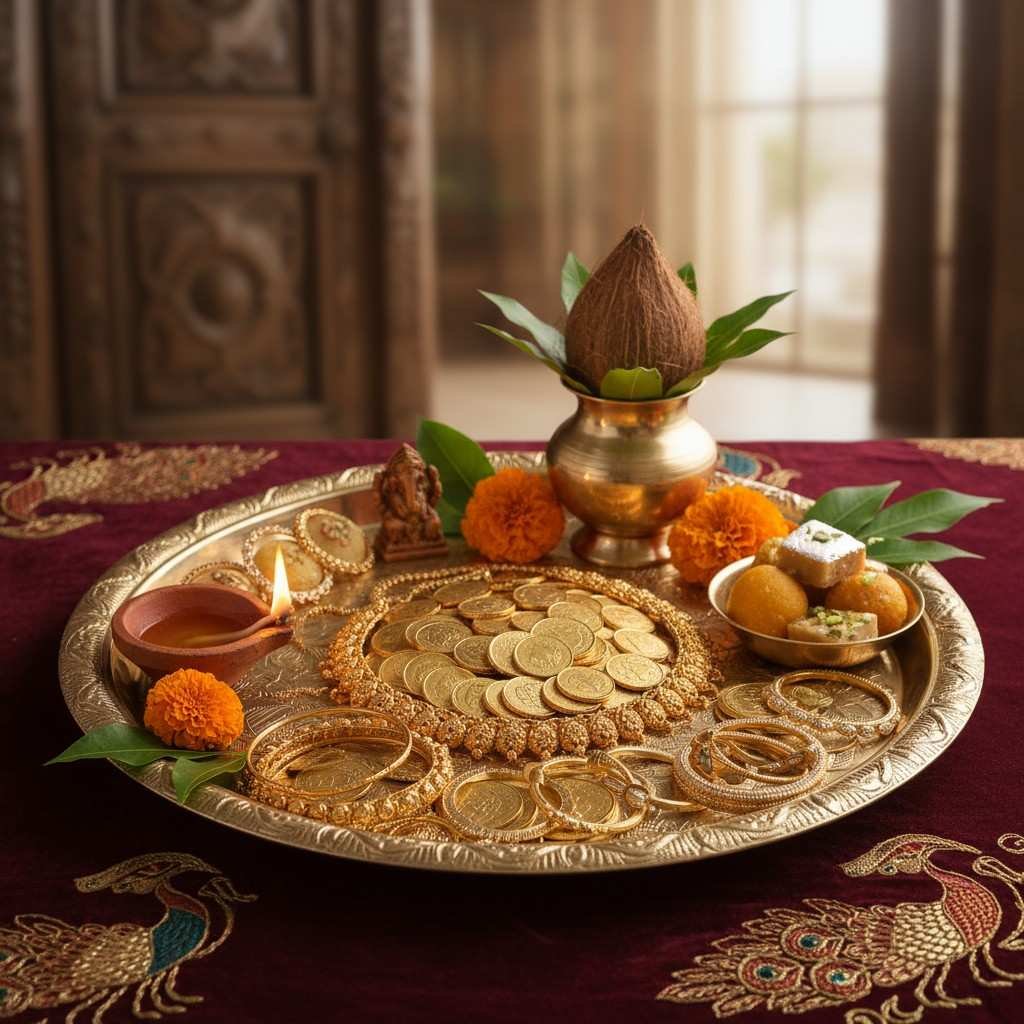
What it means: “Dhan” means wealth, and “teras” means thirteenth. This day marks the birthday of Lord Dhanvantari, the god of health and Ayurveda.
What people do:
- Buy gold, silver, utensils, or new items (considered very auspicious)
- Clean and organize homes thoroughly
- Light the first diyas
- Shop for new clothes
- Worship Goddess Lakshmi and Lord Kuber (the god of wealth)
Why it’s special: Purchasing something valuable on Dhanteras is believed to bring prosperity throughout the year. Even buying a small silver coin is considered lucky!
Day 2: Naraka Chaturdashi/Choti Diwali
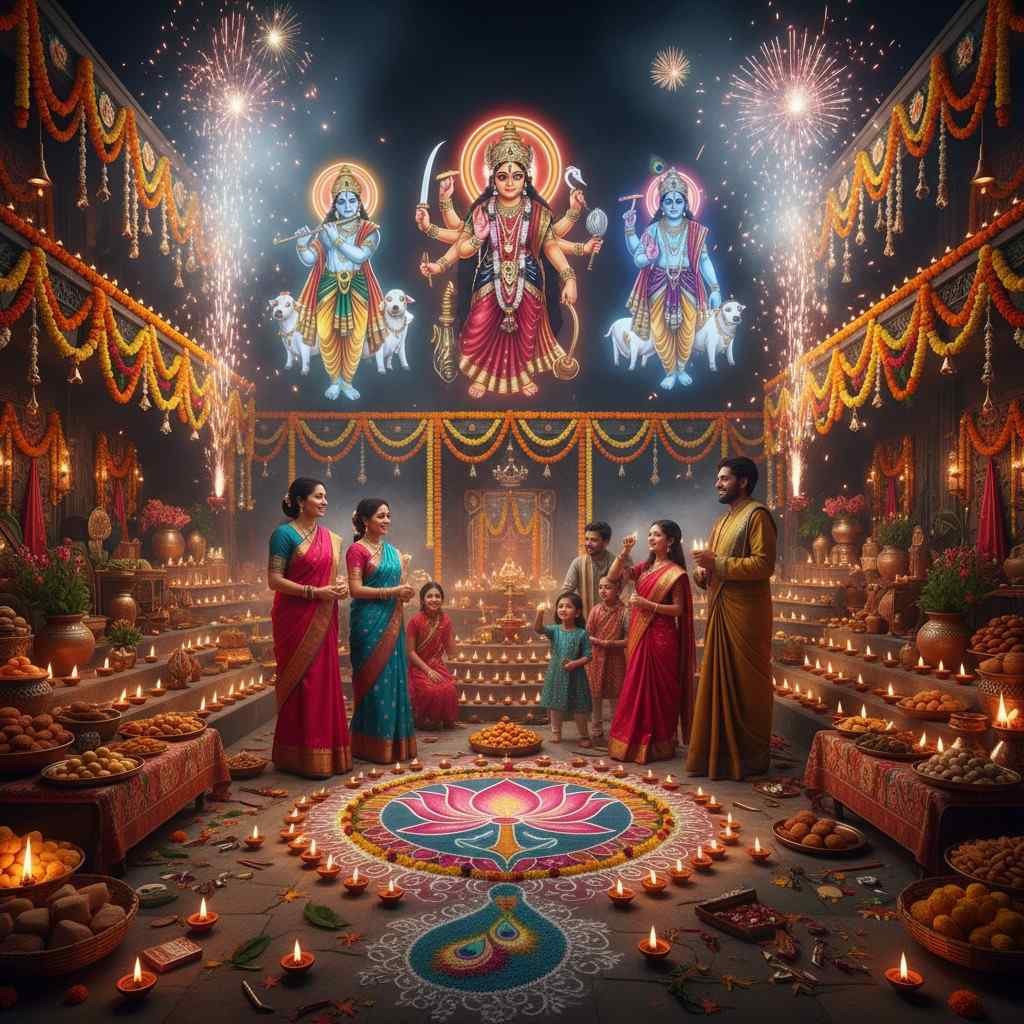
What it means: This day celebrates Lord Krishna’s victory over the demon Narakasura.
What people do:
- Wake up early and take an oil bath before sunrise
- Apply fragrant oils and wear new clothes
- Light diyas to ward off evil
- Create beautiful rangoli designs at the entrance
- Prepare sweets and special dishes
- Burst small firecrackers
Why it’s special: The early morning ritual bath is believed to wash away sins and negative energy, just as Krishna destroyed evil.
Day 3: Main Diwali – Lakshmi Puja
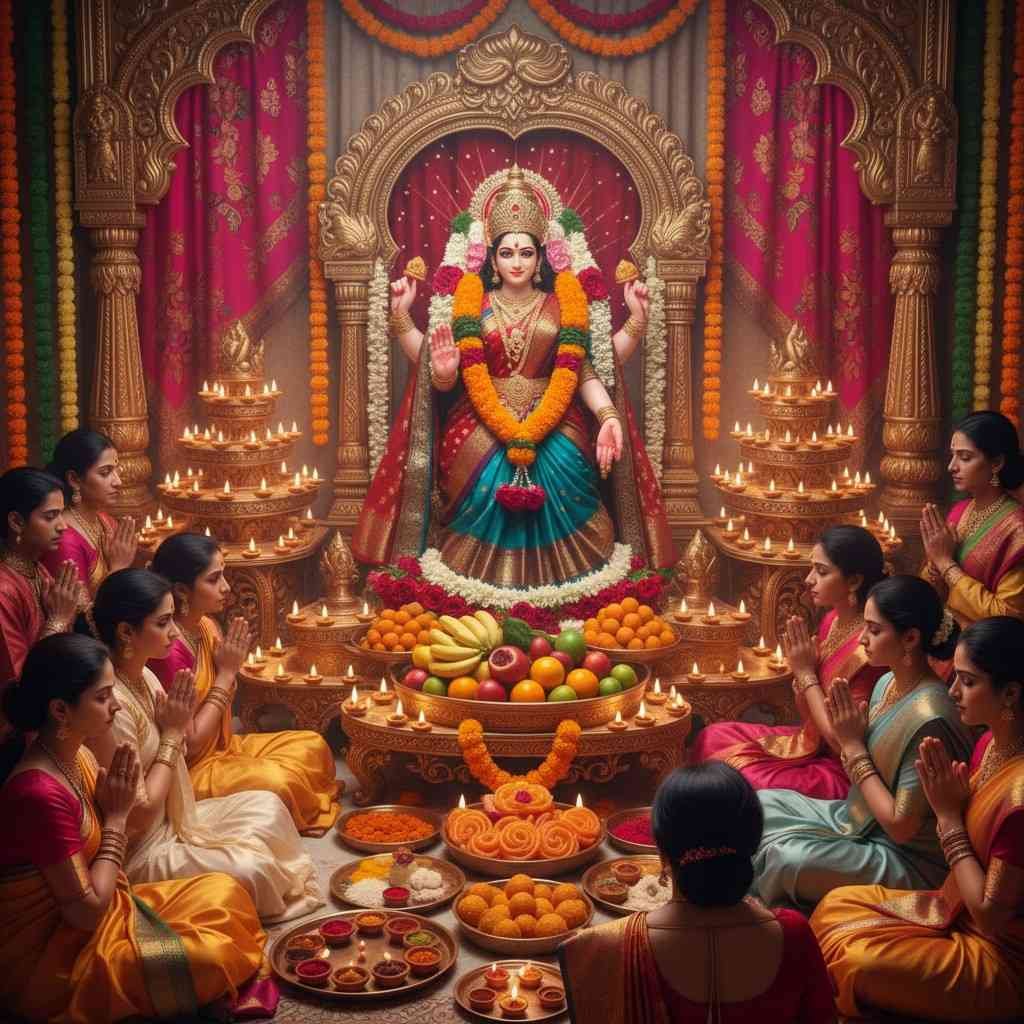
What it means: This is THE main day—the heart of Diwali celebrations!
What people do:
- Perform Lakshmi Puja in the evening
- Light hundreds of diyas and candles
- Wear new traditional clothes
- Exchange gifts and sweets with family and friends
- Burst fireworks (though eco-friendly options are encouraged)
- Play cards and games with family
- Prepare elaborate feasts
- Keep doors and windows open to welcome Goddess Lakshmi
Why it’s special: This is the darkest night of the month (new moon), and lighting it up symbolizes dispelling ignorance and welcoming divine light into our lives.
Day 4: Govardhan Puja/Padwa
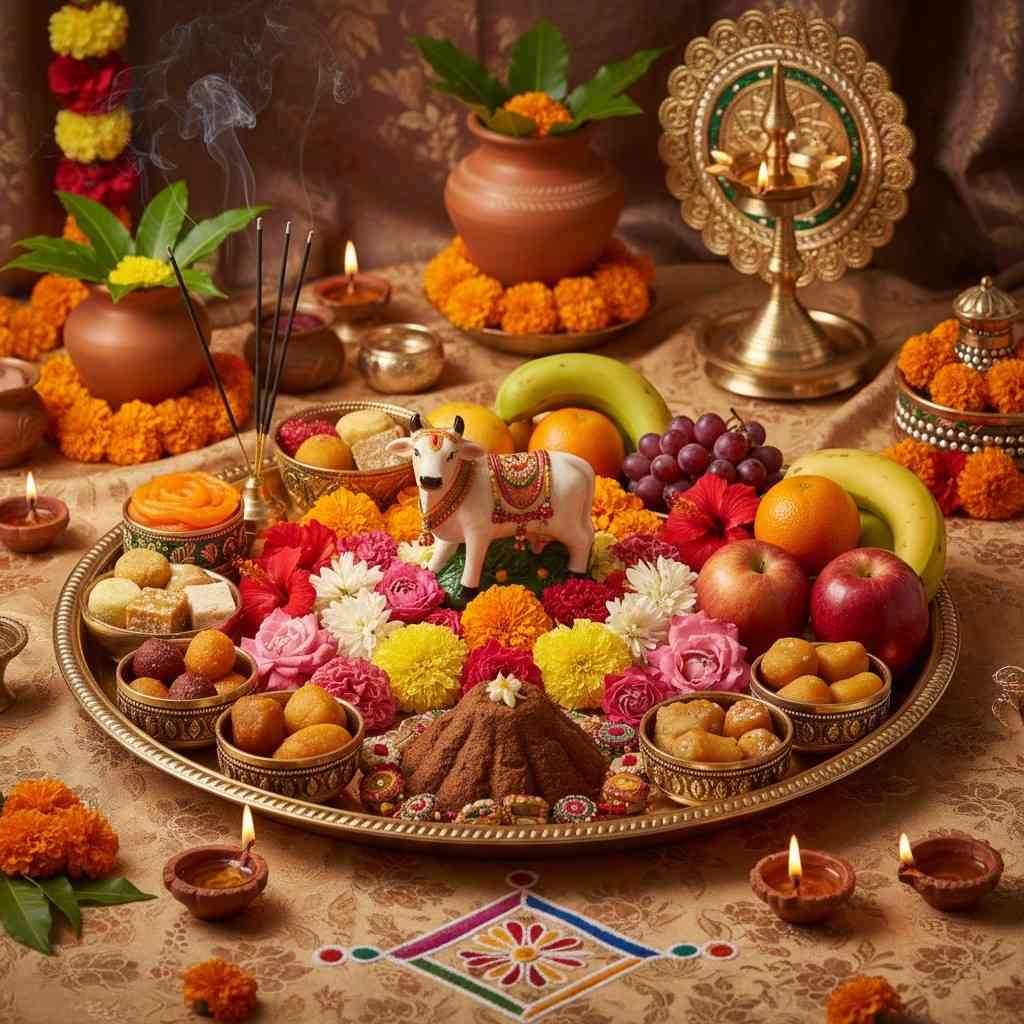
What it means: This day honors Lord Krishna’s act of lifting the Govardhan mountain to protect villagers from torrential rains sent by the rain god Indra.
What people do:
- Create small replicas of Govardhan hill using cow dung or food
- Offer 56 or 108 different food items (called Annakut)
- Worship cows and oxen
- Visit temples
- Celebrate the new year according to some regional calendars
- Husbands give gifts to wives (especially in North India)
Why it’s special: It teaches respect for nature and animals, reminding us that protecting the environment is divine work.
Day 5: Bhai Dooj
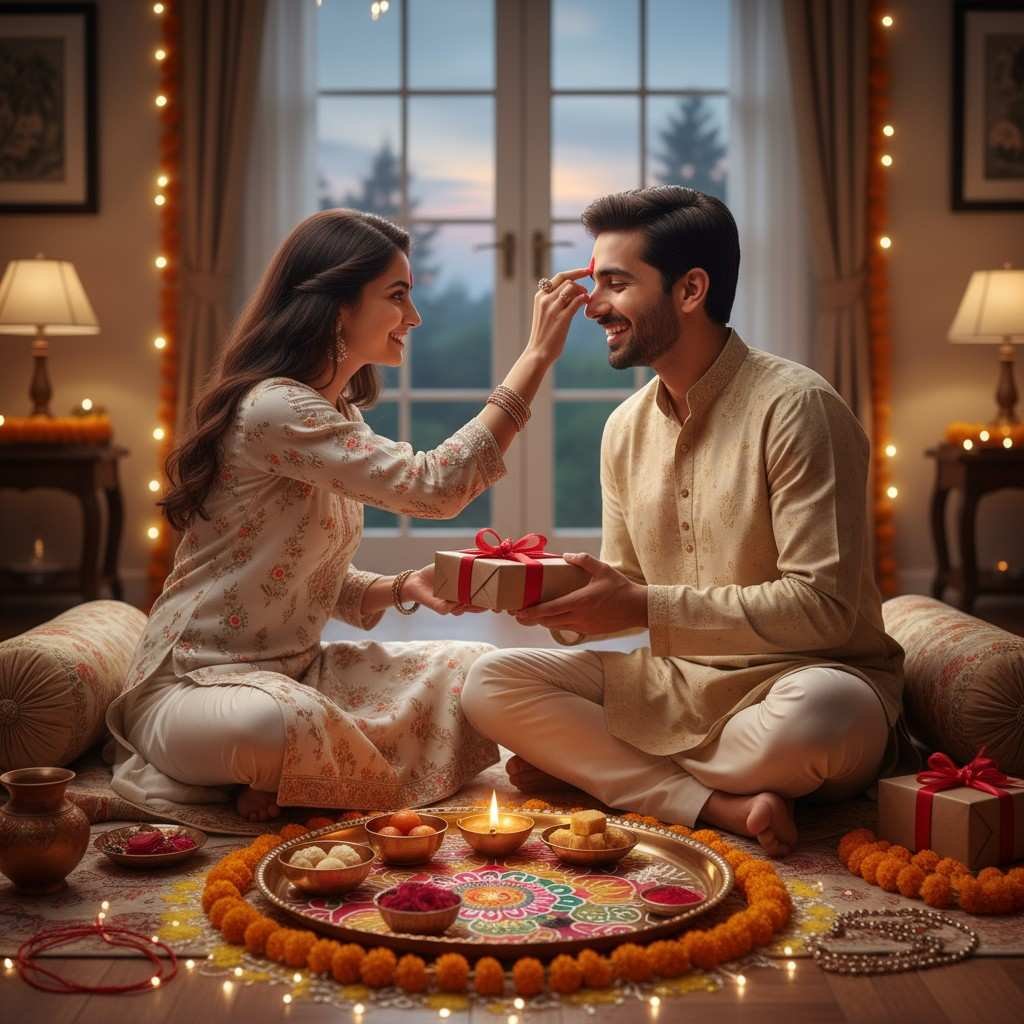
What it means: A day celebrating the beautiful bond between brothers and sisters.
What people do:
- Sisters apply tilak (vermillion mark) on their brothers’ foreheads
- Sisters pray for their brothers’ long life and prosperity
- Brothers give gifts to sisters
- Families gather for meals
- Exchange sweets
Why it’s special: Bhai Dooj strengthens family bonds and celebrates the protective love between siblings.
To know more about Bhai Dooj Bhai Dooj 2025: Date, Story, Puja Rituals & Muhurat
Complete Diwali Puja Vidhi (Worship Procedure)
Preparation Before Puja
- Clean Your Home: Thoroughly clean your entire house 2-3 days before Diwali. This isn’t just about physical cleanliness—it represents removing negativity from your life.
- Decorate Your Space:
- Create colorful rangoli at your entrance
- Hang mango leaves and marigold flowers at the door
- Place diyas at every corner and window
- Arrange fresh flowers
- Set Up the Puja Area:
- Clean a designated area for worship
- Spread a clean red or yellow cloth
- Place idols or pictures of Goddess Lakshmi and Lord Ganesha
- Keep puja items ready: flowers, incense, diyas, sweets, fruits, coins
The Lakshmi Puja Ritual (Step-by-Step)
Best Time: Pradosh Kaal (after sunset, during the first hour of darkness)
Items Needed:
- Idols/pictures of Goddess Lakshmi and Lord Ganesha
- Fresh flowers (lotus if available)
- Incense sticks and dhoop
- Diyas with ghee/oil
- Roli (vermillion), turmeric, rice grains
- Sweets and fruits
- New coins or silver items
- Betel leaves and nuts
- Sacred water (Ganga jal if available)
- Sandalwood paste
The Puja Procedure:
- Invocation (Dhyan):
- Sit facing East or North
- Light the main diya
- Close your eyes and meditate for a moment
- Invoke Lord Ganesha first (he removes obstacles)
- Ganesh Puja:
- Offer flowers to Ganesha
- Apply tilak
- Chant: “Om Gam Ganapataye Namah”
- Offer sweets (modak if possible)
- Lakshmi Puja:
- Offer flowers to Goddess Lakshmi
- Apply turmeric and kumkum
- Light multiple diyas
- Offer sweets, fruits, and coins
- Chant Lakshmi mantras or “Om Shreem Mahalakshmiyei Namah”
- Aarti:
- Perform aarti with a plate containing lit diyas
- Move the plate in circular motions clockwise
- Ring a bell while singing the Lakshmi aarti
- Everyone participates and claps
- Prasad Distribution:
- Offer the blessed sweets to all family members
- Share with neighbors and friends
- Never let the prasad go to waste
- Final Prayer:
- Pray for family’s health, wealth, and happiness
- Seek blessings for the entire year ahead
- Thank the deities for their presence
After the Puja
- Keep all diyas burning as long as possible
- Leave doors and windows open for some time
- Spend time with family
- Share sweets with neighbors
- Play traditional games
- Avoid negative thoughts and harsh words
What People Do During Diwali: Traditions and Customs
1. Home Cleaning and Decoration
Weeks before Diwali, homes undergo complete transformation. People clean every corner, repair broken items, whitewash walls, and dispose of old, unused things. This represents letting go of the old and welcoming the new.
2. Shopping Spree
Diwali shopping is legendary! Markets bustle with people buying:
- New clothes for every family member
- Gold and silver jewelry
- Household items and electronics
- Decorative items like lights and lanterns
- Gifts for family and friends
- Sweets and dry fruits
3. Rangoli Creation
Beautiful, colorful patterns called rangoli are created at entrances using:
- Colored powder
- Rice flour
- Flower petals
- Colored sand
- Even colored rice
These designs welcome guests and are believed to bring good luck.
4. Lighting Diyas and Decorative Lights
The most iconic Diwali tradition! People light:
- Earthen oil lamps (diyas) filled with ghee or mustard oil
- Candles in colorful holders
- Electric fairy lights and lanterns
- Decorative paper lanterns
Every window, door, balcony, and terrace sparkles with lights.
5. Fireworks and Crackers
Though controversial due to pollution concerns, fireworks have been traditional. However, many are now switching to:
- Eco-friendly green crackers
- Laser light shows
- Sound-free celebrations
- Donating money to charity instead
6. Preparing and Sharing Sweets
Diwali means endless varieties of sweets:
- Ladoos (ball-shaped sweets)
- Barfi (milk-based fudge)
- Kaju katli (cashew fudge)
- Gulab jamun (fried milk balls in syrup)
- Jalebi (crispy sweet spirals)
- Halwa (dense sweet pudding)
- Chakli and namkeen (savory snacks)
Families exchange boxes of these sweets with relatives, friends, and neighbors.
7. Wearing New Clothes
Everyone wears new traditional outfits:
- Women wear sarees, lehengas, or salwar kameez
- Men wear kurta-pajamas or sherwanis
- Children dress in colorful ethnic wear
- Even babies get new clothes!
8. Family Gatherings
Diwali brings families together. People travel long distances to celebrate with loved ones, sharing meals, stories, and joy.
9. Playing Cards and Games
There’s a playful tradition of gambling on Diwali night—usually friendly card games within families. It’s believed to bring good luck for the coming year.
10. Gifting Tradition
Gift-giving is essential:
- Employers give bonuses to employees
- People give gifts to household help
- Family members exchange presents
- Business associates share gift hampers
Capitalment Scientific Aspects of Diwali: Ancient Wisdom Meets Modern Science
Our ancestors weren’t just spiritual—they were scientifically smart! Here’s the science behind Diwali traditions:
1. Timing: The Science of New Moon
Diwali falls on Amavasya (new moon), the darkest night. Scientifically, this is when:
- The moon doesn’t reflect sunlight
- Nights are naturally darker
- Lighting lamps provides practical illumination
- The contrast between darkness and light is most dramatic
2. Deep Cleaning: Health and Hygiene
The pre-Diwali cleaning tradition has scientific benefits:
- Removes dust and allergens: Improves indoor air quality
- Eliminates mosquito breeding sites: Reduces diseases like dengue and malaria (October-November is peak season)
- Prevents pest infestations: Gets rid of insects and rodents
- Mental health boost: Clean spaces reduce stress and anxiety
- Physical exercise: The cleaning itself is good physical activity
3. Oil Bath Ritual: Ayurvedic Benefits
The traditional oil bath has multiple benefits:
- Moisturizes skin: Combat dry winter weather
- Improves blood circulation: Massaging oil stimulates circulation
- Detoxification: Helps remove toxins through skin
- Stress relief: Aromatic oils calm the nervous system
- Antimicrobial properties: Many traditional oils have antibacterial effects
4. Lighting Diyas: Air Purification
Burning ghee lamps scientifically:
- Produces negative ions: These improve air quality
- Antibacterial effect: Ghee smoke has mild antibacterial properties
- Removes odors: Helps neutralize unpleasant smells
- Creates ambiance: Warm light reduces stress and promotes well-being
- Carbon dioxide release: In controlled amounts, balances indoor air
5. Seasonal Transition
Diwali occurs during the transition from monsoon to winter:
- Natural harvest time: Celebrates agricultural abundance
- Weather preparation: Cleaning prepares homes for winter
- Pest control: Post-monsoon is when insects proliferate; cleaning helps
- Mental preparation: The festival boosts mood before the darker, colder months
6. Social Bonding: Psychological Health
Modern psychology recognizes the benefits:
- Reduces isolation: Forces people to connect
- Strengthens community: Collective celebrations build social bonds
- Increases happiness: Giving gifts and sharing releases dopamine
- Family bonding: Quality time improves mental health
- Sense of purpose: Rituals provide meaning and structure
7. Sound Therapy from Bells and Chants
The mantras and bell ringing during puja:
- Creates vibrations: Certain frequencies calm the mind
- Improves focus: Chanting requires concentration
- Reduces stress hormones: Repetitive sounds lower cortisol
- Meditation effect: Mantras induce meditative states
8. Color Therapy in Rangoli
The colorful rangoli designs provide:
- Visual stimulation: Bright colors boost mood
- Creativity outlet: Creating patterns is therapeutic
- Natural pigments: Traditional colors are non-toxic
- Focus and patience: Making intricate designs improves concentration
9. Dietary Benefits
Traditional Diwali foods:
- Dry fruits and nuts: Rich in healthy fats and proteins
- Ghee in sweets: Contains omega-3 fatty acids (in moderation)
- Milk-based sweets: Provide calcium and protein
- Spices: Turmeric, cardamom, saffron have antioxidants
10. Fireworks: The Debate
While beautiful, modern science shows:
- Air pollution: Releases particulate matter and toxic gases
- Noise pollution: Can harm humans and animals
- Safety hazards: Causes injuries and fires
This is why eco-friendly alternatives are becoming popular—honoring tradition while protecting health.
Which Gods and Goddesses Are Worshipped on Diwali?
Primary Deities
1. Goddess Lakshmi
- Who she is: Goddess of wealth, prosperity, fortune, and abundance
- Why worshipped: To invite prosperity and success into homes and businesses
- Appearance: Beautiful woman in red saree, sitting on a lotus, with gold coins flowing from her hands
- Significance: Represents both material and spiritual wealth
2. Lord Ganesha
- Who he is: Elephant-headed god, remover of obstacles, lord of beginnings
- Why worshipped: To remove obstacles from the path to prosperity
- Appearance: Elephant head, pot belly, holding sweets and blessings
- Significance: Must be worshipped before any other deity; represents wisdom
3. Goddess Saraswati
- Who she is: Goddess of knowledge, music, arts, and wisdom
- Why worshipped: For intellectual growth and creative success
- Appearance: Beautiful woman in white, holding a veena (musical instrument)
- Significance: Some regions worship all three goddesses together
Regional Variations
4. Goddess Kali
- Worshipped in: West Bengal and Eastern India
- Significance: This day is called Kali Puja; celebrates power over evil
- Appearance: Fierce form with dark complexion, wearing a garland of skulls
5. Lord Krishna
- Worshipped in: South India
- Significance: Celebrates his victory over demon Narakasura
- Connection: Naraka Chaturdashi is dedicated to this story
6. Lord Rama
- Worshipped in: North India
- Significance: His return to Ayodhya is why we light lamps
- Connection: The entire Ramayana story is remembered
7. Lord Vishnu
- Worshipped by: Some traditions
- Significance: Lakshmi is his consort; worshipping both brings complete blessings
- Connection: Rama and Krishna are both avatars of Vishnu
8. Lord Mahavira
- Worshipped by: Jains
- Significance: Attained nirvana on this day
- Connection: Jain Diwali focuses on spiritual liberation
9. Guru Hargobind
- Honored by: Sikhs
- Significance: His release from imprisonment
- Connection: Bandi Chhor Divas coincides with Diwali
Capitalment Personal Perspective on Diwali: A Honest Thoughts
Having written about countless festivals and cultural celebrations, Diwali stands out as something truly special. Let me share what makes this festival extraordinary from my perspective.
The Capitalment Message
What Capitalment love most about Diwali is its universality. The core message—light conquering darkness—transcends religion, culture, and geography. Whether you’re Hindu, Jain, Sikh, or someone who simply appreciates beauty, Diwali speaks to something fundamental in the human spirit: hope.
We all face darkness in our lives—challenges, failures, losses, fears. Diwali reminds us that no matter how dark it gets, we can always light a lamp. That one small flame can dispel enormous darkness. This isn’t just poetic; it’s a life philosophy.
Beyond Materialism
While Goddess Lakshmi represents wealth, Capitalment believe modern celebrations sometimes miss the deeper meaning. Lakshmi doesn’t just bring money—she brings “shubh” (auspiciousness), “labh” (gain in all forms), and “samriddhi” (prosperity of the soul).
True prosperity isn’t just a fat bank account. It’s:
- Health that lets you enjoy life
- Relationships that support you
- Knowledge that empowers you
- Peace that grounds you
- Generosity that fulfills you
When we pray to Lakshmi, we should ask for abundance in all these forms.
The Power of Collective Joy
In our increasingly digital, isolated world, Diwali forces us to connect. You can’t celebrate Diwali alone—it demands participation. You clean with family, shop with friends, share sweets with neighbors, and light lamps that others can see.
This collective celebration creates a ripple effect of happiness. When millions of people consciously choose joy on the same day, it creates an atmosphere of positivity that’s almost tangible. Science might call it “social contagion of happiness,” but I call it magic.
Capitalment Environmental Consciousness: Evolution, Not Rejection
The debate about fireworks and pollution is important. But instead of seeing it as “modern values versus tradition,” Capitalment see it as tradition evolving.
Our ancestors lit lamps—not to pollute, but to celebrate light. If fireworks cause harm, we can honor the spirit of the tradition while choosing eco-friendly alternatives. This isn’t abandoning tradition; it’s being true to Diwali’s core message of bringing light, not causing suffering.
Green crackers, laser shows, charity donations, community gatherings, or simply more diyas—all these honor the festival while caring for the planet our children will inherit.
The Ritual Creates the Experience
Capitalment is fascinated by Diwali rituals. The cleaning isn’t just hygiene—it’s a psychological reset. The oil bath isn’t just skincare—it’s a mindfulness practice. The puja isn’t just prayer—it’s a family meditation.
These rituals work because they force us to slow down, be present, and participate consciously. In our rushed lives, when do we ever light 50 lamps mindfully? When do we sit with family for an hour without distractions? When do we consciously wish prosperity for others?
Diwali rituals create space for these rare, precious moments.
Learning from the Mythological Stories
The stories behind Diwali aren’t just ancient tales—they’re psychological wisdom:
Rama’s return teaches that patience and righteousness eventually triumph. After 14 years of hardship, he came home victorious. Sometimes success takes time.
Krishna defeating Narakasura shows that protecting the innocent and standing against injustice is divine work. We all have our own “demons” to defeat—maybe it’s a bad habit, toxic relationship, or harmful pattern.
Lakshmi visiting homes reminds us that prosperity comes to those who prepare for it. Clean your space (literally and metaphorically), light your lamp (be visible and welcoming), and maintain discipline.
The Business of Festivity
Yes, Diwali has become commercial. But is that entirely bad? The festival supports:
- Artisans making diyas and decorations
- Sweet makers earning annual income
- Small businesses getting bonuses
- Families employed in festival-related industries
If commercialization means more people earn livelihoods, that’s prosperity too—another form of Lakshmi’s blessing flowing through the economy.
The problem isn’t spending—it’s wasteful spending. Buy that beautiful handmade diya from a local artisan rather than plastic decoration from a multinational. That’s conscious capitalism.
Personal Transformation Over Social Performance
Capitalment honest observation: Social media has made Diwali partly performative. People are more concerned about posting the perfect rangoli photo than enjoying making it. The puja becomes a photo-op rather than a prayer.
Capitalment advice? Put the phone down for a bit. Let the puja be imperfect. Let the rangoli be simple. Let the celebration be authentic. The divine doesn’t need Instagram proof.
Diwali’s real magic happens in the quiet moments—when a grandmother tells stories by lamplight, when families cook together, when you sit in silence watching diyas flicker, when you genuinely wish someone well.
Teaching the Next Generation
Capitalment worry about losing cultural depth. Many young people know Diwali means “lights and sweets” but don’t know why.
If you’re celebrating with children, tell them the stories. Explain why we clean. Discuss what each ritual means. Let them understand that lighting a lamp is a symbolic act of bringing light into the world—not just flipping a switch.
Cultural traditions survive not through blind repetition but through understanding and meaning.
The Inclusive Spirit
What Capitalment admire most about Diwali is how inclusive it can be. It’s celebrated by multiple religions, each with their own interpretation. Even non-Hindus appreciate the beauty. Offices and communities celebrate together.
In a world often divided by religion and politics, Diwali shows that joy can be shared. Light is light, regardless of who kindles it or why.
Capitalment Diwali Wish
Having written this comprehensive guide, here’s what Capitalment genuinely wish:
May you find the light within before seeking it outside. May your home be prosperous in laughter, not just wealth. May you give more than you receive. May your diyas burn bright, but your heart burn brighter. May you celebrate traditions while creating new, meaningful ones. And may you remember that every day can be Diwali if you choose to dispel darkness and spread light.
Capitalment Final Thought
Diwali reminds us that being human means having the power to create light—literally and metaphorically. In a world that often seems dark with problems, injustice, and suffering, we can choose to light our small lamp.
That tiny flame might seem insignificant against vast darkness, but that’s the beautiful paradox: A single flame is visible from far away. One person choosing light inspires others. And when millions of us light our lamps together, we create a constellation of hope.
That’s the real miracle of Diwali. Not that Goddess Lakshmi visits homes. But that millions of people, across nations and generations, simultaneously choose light over darkness.
And in that choice, we find our humanity.
Celebrating Diwali in the Modern World: Practical Tips
For Families
- Start meaningful traditions: Create new rituals that reflect your values
- Involve children: Let them help with decorations and pujas
- Tell stories: Share mythology and family histories
- Cook together: Prepare traditional sweets as a family activity
- Give back: Donate clothes, food, or money to those in need
For Young Adults
- Celebrate with roommates: Create a “chosen family” celebration
- Virtual pujas: Connect with family remotely if you can’t be home
- Sustainable choices: Opt for eco-friendly celebrations
- Cultural education: Learn about traditions you might not know
- Community service: Volunteer at organizations helping the underprivileged
For the Environmentally Conscious
- Skip fireworks: Choose laser lights or donate to charity instead
- Natural rangoli: Use flowers, rice, or natural colors
- Clay diyas: Support artisans; avoid plastic decorations
- Sustainable gifts: Choose handmade, local, or experience-based gifts
- Minimal waste: Plan parties to minimize food waste
For Those Away from Home
- Virtual celebrations: Video call during puja time
- Local community: Find Diwali events in your city
- Create atmosphere: Light diyas in your apartment/room
- Cook traditional food: Even simple dishes connect you to culture
- Share with friends: Introduce non-Indian friends to the festival
Capitalments Conclusion: The Eternal Light
Diwali is more than a festival—it’s a reminder, a celebration, a hope, and a choice. It reminds us that light exists even in the darkest moments. It celebrates the victories of good, both cosmic and personal. It offers hope that prosperity, joy, and wisdom are always within reach. And it asks us to make a choice: Will we add light to the world or allow darkness to persist?
As you celebrate Diwali this year, remember that every ritual has meaning, every tradition carries wisdom, and every lamp you light is a statement of hope.
From the cleaning that prepares your space and mind, to the puja that centers your spirit, to the sweets that sweeten relationships, to the lights that announce your presence in the world—every act is sacred if done with awareness.
May this Diwali bring you:
- Prosperity that fills not just your pockets, but your soul
- Relationships that illuminate your life like a thousand diyas
- Health that lets you enjoy all blessings
- Wisdom to navigate challenges
- Courage to be the light in someone else’s darkness
- Joy that bubbles over and touches everyone around you
And remember—the festival ends, but its message remains. You don’t need to wait for next Diwali to light a lamp. You can choose light every single day.
Happy Diwali! Shubh Deepavali!
Disclaimer: This article is written for informational and cultural education purposes. While we respect all religious traditions and beliefs, we encourage readers to follow practices that align with their own values, especially regarding environmental concerns. Celebrate responsibly, sustainably, and joyfully.
About the Festival Dates: Diwali dates vary based on the lunar calendar and regional interpretations. Always confirm specific dates and muhurat timings with local religious authorities or panchangs (Hindu calendars) for accuracy.
Safety Note: Please exercise caution with fire, fireworks, and electrical decorations. Keep children supervised around flames and hot oil. Follow local regulations regarding fireworks and noise levels.
May your life be as bright as the Diwali lights! 🪔✨
Very good and beautiful, informative
excellent and helpful
very good and hepful
very good and hepful