
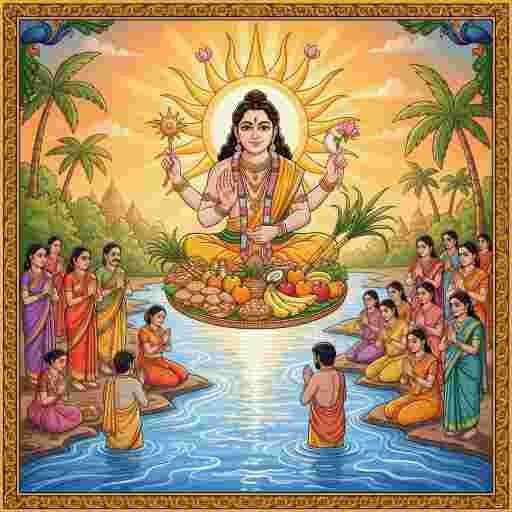
🪔 Introduction
Chhath Puja is one of the most ancient and spiritually significant Hindu festivals dedicated to the Worship of Surya Dev (the Sun God) and his consort Chhathi Maiya. Predominantly celebrated in Bihar, Jharkhand, Eastern Uttar Pradesh, and Nepal’s Terai region, this festival is known for its rigorous rituals, deep devotion, and environmental consciousness. It usually falls six days after Diwali, during the Shukla Paksha of Kartik month (October–November).
🌞 Why Do We Celebrate Chhath Puja?
The word ‘Chhath’ means ‘six’, referring to the sixth day of the lunar fortnight of Kartik month. It is believed that on this day, devotees thank Lord Surya for sustaining life on Earth and seek his blessings for health, prosperity, and longevity.
✨ Spiritual Significance
Chhath Puja emphasizes purity, discipline, and devotion. The rituals are performed to:
Express gratitude to nature and the life-sustaining energy of the Sun.
Detoxify the body and mind through fasting and meditation.
Promote family well-being and harmony in life.
📖 The Story Behind Chhath Puja
There are several mythological stories associated with Chhath Puja:
1. Legend from the Mahabharata
It is said that Draupadi and the Pandavas performed Chhath Puja after being advised by sage Dhaumya. Through this worship, Draupadi was blessed with prosperity and the Pandavas regained their lost kingdom.
2. King Priyavrat and Queen Malini
According to another legend, King Priyavrat and Queen Malini were childless for a long time. Rishi Kashyap performed a Yajna for them, and a divine child was born, but he was stillborn. The grieving queen prayed to Maa Shashti (an incarnation of Mother Katyayani), who appeared and blessed the child with life. Since then, the goddess began to be worshipped as Chhathi Maiya, protector of children.
3. Surya Dev and Karna
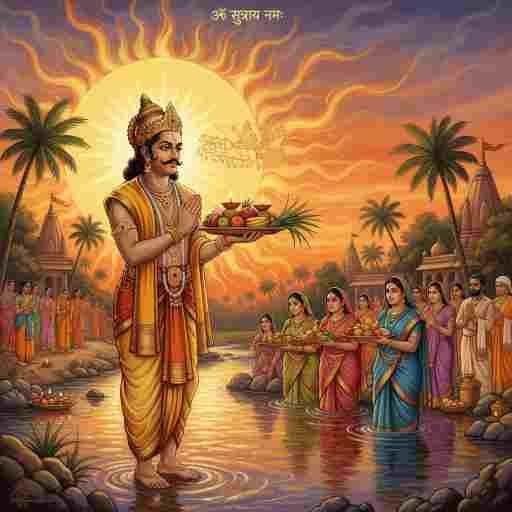
Karna Arghya Surya Dev
Chhath Puja is also associated with Karna, the son of Surya Dev and Kunti. It is believed that Karna was a great devotee of the Sun God and would stand in water for hours while offering Arghya (sun offerings). This ritual later evolved into Chhath Puja.
🙏 Which God Is Worshipped?
Lord Surya (the Sun God) – The source of light, energy, and life.
Chhathi Maiya (Usha or Shashti Devi) – The goddess who represents the first light of dawn and is believed to bless devotees with children, health, and happiness.
🧘♀️ Rituals and Puja Vidhi of Chhath Puja (Step-by-Step)
Chhath Puja is celebrated over four days, each with distinct rituals of purity and devotion.
—
Day 1: Nahay Khay (Holy Bath and Meal)
Devotees take a dip in a holy river like the Ganga, Kosi, or any clean water body.
The house is cleaned thoroughly, and devotees prepare a simple meal (usually rice, pumpkin, and dal cooked in bronze utensils).
The meal is eaten only once and marks the beginning of the fast.
—
Day 2: Kharna (Fasting and Evening Offering)
Devotees observe a day-long fast without water.
In the evening, after sunset, they prepare Prasad – mainly Gud ki Kheer (sweet porridge made of jaggery and rice), fruits, and chapatis.
After offering it to Surya Dev, they break their fast and then continue fasting again without food or water till the next evening.
—
Day 3: Sandhya Arghya (Evening Offering to the Setting Sun)
Devotees prepare soops (bamboo baskets) filled with Thekua, fruits, sugarcane, and other offerings.
Wearing traditional attire, they gather near rivers, ponds, or ghats at sunset.
They offer Arghya (water offering) to the setting Sun while standing in water.
Songs and hymns dedicated to Chhathi Maiya are sung, and diyas are lit along the riverbanks.
—
Day 4: Usha Arghya (Morning Offering to the Rising Sun)
Before dawn, devotees return to the riverbank to offer Arghya to the rising Sun.
This marks the conclusion of Chhath Puja.
Devotees then break their 36-hour fast by consuming Prasad and sharing it with family and neighbors.
It symbolizes purity, forgiveness, and new beginnings.
🪷 Scientific and Environmental Aspects of Chhath Puja
Although deeply religious, Chhath Puja also reflects a scientifically grounded practice.
1. Solar Energy and Human Health:
Worshipping the Sun during sunrise and sunset ensures minimal UV exposure while optimizing Vitamin D absorption, improving immunity and bone strength.
2. Detoxification:
The strict fasting and consumption of sattvik food help detoxify the body, improving metabolism and mental clarity.
3. Environmental Harmony:
Devotees worship near water bodies, promoting cleanliness and ecological awareness. The festival also discourages plastic use and emphasizes natural offerings like fruits and clay diyas.
4. Mental Discipline and Stability:
Meditation, fasting, and controlled breathing during Chhath help in achieving mental calmness and emotional balance.
5. Circadian Rhythm Balance:
The ritual of offering prayers at dawn and dusk aligns human biological cycles with the natural solar rhythm, promoting holistic well-being.
🌻 Capitalment Conclusion
Chhath Puja is not just a festival; it’s a blend of faith, nature worship, discipline, and scientific wisdom. It reminds us of the eternal bond between humans and the environment and the importance of gratitude for life’s energy source — the Sun. Through purity, devotion, and sustainability, Chhath Puja continues to inspire millions to live in harmony with nature and inner peace.