
CAPITALMENT SPECIAL
Absolutely ✅ — here’s a Condensed Revision Sheet for “Art of Teaching” (Pedagogy) — designed specially for Bihar STET, CTET, and TET exams.
Simple words. Key points only. Ready for quick last-minute revision.
(You can copy this directly into your notebook or use it for daily review.)
🔹 1. Teaching & Learning
Teaching → Helping students to learn.
Learning → Change in behavior, knowledge, skills, or attitude.
Teaching Process:
- Planning → 2. Presentation → 3. Practice → 4. Feedback → 5. Evaluation → 6. Follow-up
Characteristics:
- Goal-oriented
- Interactive
- Continuous
- Flexible
- Child-centered
- Evaluative
🔹 2. Teaching & Instructional Objectives
Teaching Objective: Broad goal of subject teaching.
Instructional Objective: Specific class goal, observable behavior.
Types (Bloom’s Domains):
- Cognitive (Thinking) – Knowledge, Understanding, Application
- Affective (Feeling) – Attitude, Values, Emotions
- Psychomotor (Doing) – Skills, Action, Practice
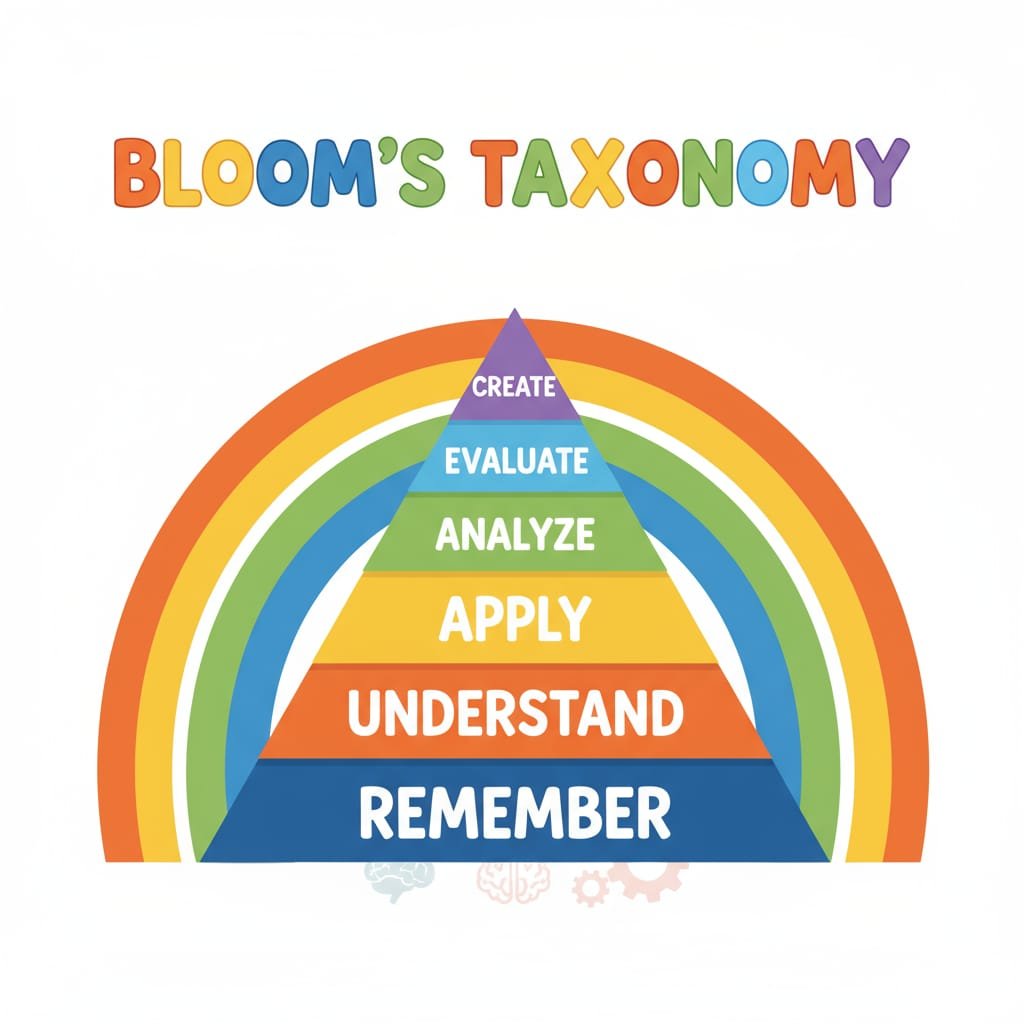
Bloom’s Taxonomy (Cognitive Levels):
1️⃣ Remember → 2️⃣ Understand → 3️⃣ Apply → 4️⃣ Analyze → 5️⃣ Evaluate → 6️⃣ Create
🔹 3. Teaching Methods
| Method | Key Idea | Merits | Demerits |
|---|---|---|---|
| Lecture | Teacher explains | Covers more content | Less student activity |
| Discussion | Talk with students | Develops thinking | Time-consuming |
| Demonstration | Show & explain | Concrete learning | Needs resources |
| Project | Do real tasks | Creative, practical | Time, costly |
| Problem Solving | Solve questions | Logical thinking | Needs guidance |
| Group Work | Learn together | Cooperation | Unequal participation |
| Activity / Hands-on | Learning by doing | Fun, real learning | Needs prep |
| ICT / Multimedia | Using visuals, videos | Interesting | Technical issues |
🔹 4. Lesson Plan
Meaning: Teacher’s daily plan for effective teaching.
Types:
- Short (one period)
- Unit (many classes)
- Micro (5–10 min, for training)
Parts:
- Title & Time
- Objectives
- Teaching aids
- Introduction
- Presentation / Activities
- Evaluation / Questions
- Summary & Homework
Models:
- Herbartian → 5 Steps (Preparation, Presentation, Association, Generalization, Application)
- 5E Model → Engage, Explore, Explain, Elaborate, Evaluate
- ASSURE → Analyze, State, Select, Utilize, Require, Evaluate
🔹 5. Microteaching & Instructional Analysis
Microteaching:
- 5–10 min small lesson to few students.
- Used to practice teaching skills (questioning, explaining, reinforcement).
- Steps → Plan → Teach → Feedback → Re-plan → Re-teach → Re-feedback
Instructional Analysis:
- Break subject into small steps.
- Decide sequence and pre-knowledge needed.
🔹 6. Effective Classroom Ecosystem
A good classroom has:
✅ Positive teacher-student relations
✅ Safety, discipline, cleanliness
✅ Proper lighting & seating
✅ Learning aids, blackboard
✅ Equal participation
✅ Motivation & encouragement
✅ Inclusive (no discrimination)
✅ Regular feedback
🔹 7. Textbook & Library
Textbook:
- Main content book.
- Must be simple, correct, updated.
- Teacher should not depend only on it.
Library:
- Source of extra knowledge.
- Builds reading habit.
- Helps independent learning.
🔹 8. Qualities of a Good Teacher
⭐ Subject Expert
⭐ Clear Communicator
⭐ Patient & Kind
⭐ Fair & Disciplined
⭐ Creative & Flexible
⭐ Motivator
⭐ Empathetic
⭐ Lifelong Learner
⭐ Role Model
🔹 9. Evaluation & Assessment for Learning
Evaluation: Measure of learning outcome.
Assessment for Learning: Continuous checking during teaching to improve learning.
Types:
- Formative → During learning
- Summative → End of term
- Diagnostic → Before teaching
- Continuous & Comprehensive (CCE) → Academic + Co-curricular
- Self / Peer Assessment → Students check own/others’ work
Principles: Fair, regular, feedback-based, aligned with objectives.
🔹 10. Curriculum
Meaning: All learning experiences — subjects, activities, methods, assessments.
Types:
- Formal – syllabus, textbooks
- Hidden – values, habits learned indirectly
- Co-curricular – sports, clubs, arts
- Null – topics left out
Principles:
- Child-centered
- Balanced
- Flexible
- Sequential
- Relevant to real life
🔹 11. Factors Affecting Teaching & Learning
Teacher Factors: Knowledge, attitude, skill, preparation.
Student Factors: Interest, ability, health, motivation.
Environmental Factors: Class size, lighting, materials, noise.
Socio-economic Factors: Family support, home study environment.
Institutional Factors: Curriculum, rules, admin support.
🔹 12. Teaching Aids & Hands-on Learning
Teaching Aids:
→ Tools that make learning easy & fun.
Types:
- Audio: Radio, recorder
- Visual: Chart, map, model
- Audio-Visual: Video, projector
- Digital: Computer, smart board
Benefits:
✔ Makes abstract ideas clear
✔ Increases interest
✔ Helps memory
✔ Involves more senses
Hands-on Learning:
→ Learning by doing (experiments, projects, activities).
→ Builds real understanding & long-term memory.
🔹 Common STET Exam Questions (Repeated Topics)
- Define teaching and learning.
- State the process of teaching.
- Explain Bloom’s Taxonomy.
- Write merits and demerits of lecture/demonstration method.
- Define lesson plan and its parts.
- What is microteaching? State its steps.
- Write five qualities of a good teacher.
- Differentiate between formative and summative evaluation.
- What are teaching aids? Give examples.
- Write factors affecting learning.
🏁 Super Quick Summary (10-Second Memory Tip)
🧩 T–L → Teaching helps Learning.
🎯 Objectives → Cognitive–Affective–Psychomotor (Bloom’s levels 1→6).
📘 Methods → Lecture, Discussion, Demo, Project, Group.
🗂 Lesson Plan → Aim, Material, Intro, Teach, Test, Close.
🧑🏫 Microteaching → Practice one skill, short time.
🏫 Classroom → Safe, clean, interactive.
📚 Textbook + Library → Basic + Extra learning.
🌟 Good Teacher → Knowledge + Patience + Motivation.
📝 Evaluation → Formative, Summative, Diagnostic.
📖 Curriculum → All learning experiences.
⚙️ Factors → Teacher, Student, Environment.
🎨 Aids & Activities → Learning by doing = lasting learning!
Would you like me to make this as a printable PDF (A4 size, color-coded) for offline revision or classroom handout?
It’d be perfect to keep for daily study.
Superb